Rooted In Community Reading List

Soil: The Story of a Black Mother’s Garden by Camille Dungy
In Soil: The Story of a Black Mother’s Garden, poet and scholar Camille T. Dungy recounts the seven-year odyssey to diversify her garden in the predominantly white community of Fort Collins, Colorado. When she moved there in 2013 with her husband and daughter, the community held restrictions about what residents could and could not plant in their gardens. In resistance to the homogenous policies that limited the possibility and wonder that grows from the earth, Dungy employs the various plants, herbs, vegetables, and flowers she grows in her garden as metaphor and treatise for how homogeneity threatens the future of our planet, and why cultivating diverse and intersectional language in our national discourse about the environment is the best means of protecting it.

Black Earth Wisdom: Soulful Conversations with Black Environmentalists by Leah Penniman
A soulful collection of illuminating essays and interviews that explore Black people’s spiritual and scientific connection to the land, waters, and climate, curated by the acclaimed author of Farming While Black
Author of Farming While Black and co-founder of Soul Fire Farm, Leah Penniman reminds us that ecological humility and ancestral wisdom are an intrinsic part of Black cultural heritage. While racial capitalism has attempted to sever our connection to the sacred earth for 400 years, Black people have long seen the land and water as family and understood the intrinsic value of nature.
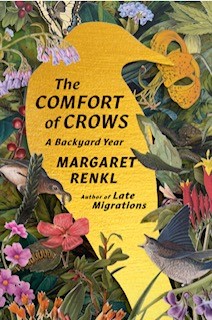
The Comfort of Crows: A Backyard Year by Margaret Renkl
From the author of Late Migrations comes a luminous book tracing the passing of seasons, personal and natural.
In The Comfort of Crows, New York Times opinion writer and bestselling author Margaret Renkl presents a literary devotional: fifty-two chapters that follow the creatures and plants in her backyard over the course of a year. As we move through the seasons—from a crow spied on New Year’s Day, its resourcefulness and sense of community setting a theme for the year—what develops is a portrait of joy and grief. Joy at the ongoing pleasures of the natural world: “Until the very last cricket falls silent, the beauty-besotted will always find a reason to love the world.” And grief at a shifting climate, at winters that end too soon, at songbirds growing fewer and fewer.
Is a River Alive? by Robert Macfarlane
Hailed in the New York Times as “a naturalist who can unfurl a sentence with the breathless ease of a master angler,” Robert Macfarlane brings his glittering style to a profound work of travel writing, reportage, and natural history. Is a River Alive? is a joyful, mind-expanding exploration of an ancient, urgent idea: that rivers are living beings who should be recognized as such in imagination and law.
Macfarlane takes readers on three unforgettable journeys teeming with extraordinary people, stories, and places: to the miraculous cloud-forests and mountain streams of Ecuador, to the wounded creeks and lagoons of India, and to the spectacular wild rivers of Canada―imperiled respectively by mining, pollution, and dams. Braiding these journeys is the life story of the fragile chalk stream a mile from Macfarlane’s house, a stream who flows through his own years and days.
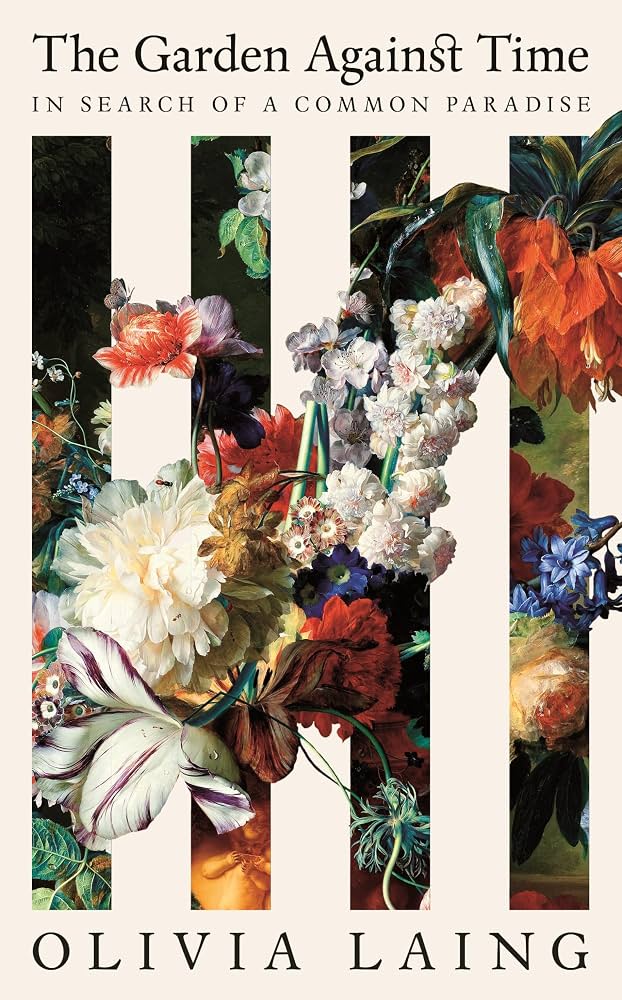
The Garden Against Time: In Search of a Common Paradise by Olivia Laing
In 2020, Olivia Laing began to restore a walled garden in Suffolk, an overgrown Eden of unusual plants. The work drew them into an exhilarating investigation of paradise and its long association with gardens.
Moving between real and imagined gardens, from Milton’s Paradise Lost to John Clare’s enclosure elegies, from a wartime sanctuary in Italy to a grotesque aristocratic pleasure ground funded by slavery, Laing interrogates the sometimes shocking cost of making paradise on earth.

Bad Naturalist: One Woman's Ecological Education on a Wild Virginia Mountaintop by Paula Whyman
When Paula Whyman first climbs a peak in the foothills of the Blue Ridge Mountains in search of a home in the country, she has no idea how quickly her tidy backyard ecology project will become a massive endeavor. Just as quickly, she discovers how little she knows about hands-on conservation work. In Bad Naturalist, readers meander with her through orchards and meadows, forests and frog ponds, as she is beset by an influx of invasive species, rattlesnake encounters, conflicting advice from experts, and delayed plans—but none of it dampens her irrepressible passion for protecting this place. With delightful, lyrically deft storytelling, she shares her attempts to coax this beautiful piece of land back into shape. It turns out that amid the seeming chaos of nature, the mountaintop is teeming with life and hope.

We Will Be Jaguars: A Memoir of My People by Mitch Anderson and Nemonte Nenquimo
Born into the Waorani tribe of Ecuador’s Amazon rainforest―one of the last to be contacted by missionaries in the 1950s―Nemonte Nenquimo had a singular upbringing.
She was taught about plant medicines, foraging, oral storytelling, and shamanism by her elders. At age fourteen, she left the forest for the first time to study with an evangelical missionary group in the city. Eventually, her ancestors began appearing in her dreams, pleading with her to return and embrace her own culture. She listened.
Two decades later, Nemonte has emerged as one of the most forceful voices in climate change activism. She has spearheaded the alliance of indigenous nations across the Upper Amazon and led her people to a landmark victory against Big Oil, protecting over a half million acres of primary rainforest. Her message is as sharp as a spear―honed by her experiences battling loggers, miners, oil companies and missionaries.
In We Will Be Jaguars, she partners with her husband, Mitch Anderson, founder of Amazon Frontlines, digging into generations of oral history, uprooting centuries of conquest, hacking away at racist notions of indigenous peoples, and ultimately revealing a life story as rich, harsh, and vital as the Amazon rainforest herself.
"Authority" in Orion Magazine by Eula Biss
In "Authority," Eula Biss reflects on the lessons she learned in a student-run garden where knowledge came not from expertise, but from experimentation, mistakes, and experience. Through stories of weeding, planting, and questioning who gets to be in charge, Biss explores the limits of authority and the ways we often undermine it ourselves. A thoughtful meditation on learning, responsibility, and the value of direct experience, this essay reveals why true understanding is earned rather than inherited.
'Hey doc, my planet hurts. Can you write me a prescription?' by David Victorson
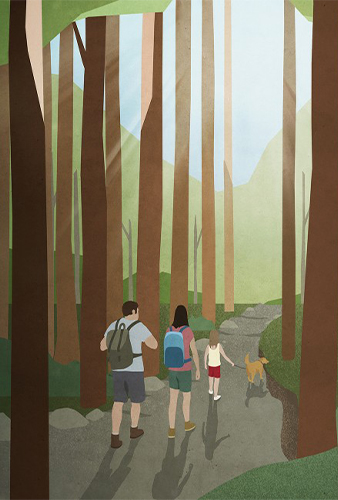
In this article for Northwestern Now, psychologist and researcher David Victorson explores how nature prescriptions—recommendations from health care providers to spend time outdoors—can benefit both human and planetary health. Drawing on research, environmental philosophy, and Indigenous knowledge systems, Victorson argues that physicians can help foster sustainable habits by pairing nature-based wellness practices with everyday environmental actions. The piece offers a hopeful vision of reciprocity between people and planet, suggesting that caring for our own wellbeing and caring for the Earth are deeply interconnected.