Building Community: How ASAG Became a Home for APIDA Staff
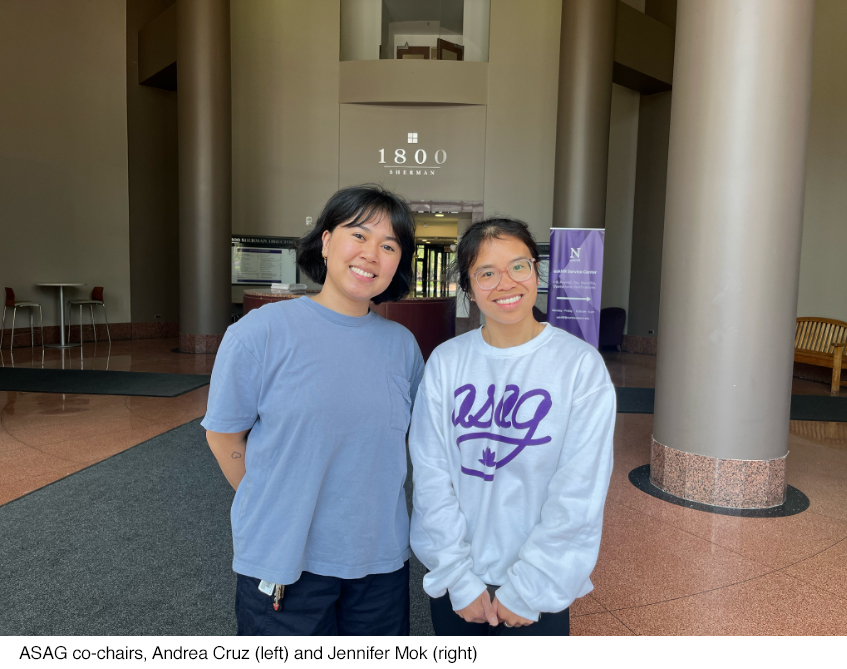 When Jennifer Mok first arrived at Northwestern nine years ago, her goal was simple: she wanted to find a sense of community among Asian Americans on campus. What started as a few informal lunches among colleagues soon grew into something much greater: the founding of Northwestern’s APIDA Staff Affinity Group (ASAG).
For her co-chair, Andrea Cruz, who joined two years ago, providing that sense of belonging has been especially meaningful.
“It's always nice to have a space where it can feel like coming home with people who share your identities and may or may not share your same experiences, but have that common thread of being a person who has had to navigate the world with their unique experiences,” Cruz said.
Mok’s personal journey is echoed by others in the group, each bringing their own background and perspective. Mok grew up in the South, where she says there was not a large Asian American community. In contrast, Cruz, raised in a strong Asian community, emphasizes ASAG's importance for those seeking similar support.
“I hope [members] can find it to be a safe space where they can just be who they are and they leave with new connections,” Mok said. “That it gives them a spark because that's what it does for me.”
ASAG’s resilience is a point of pride for its co-chairs. In a world that is constantly changing — through global challenges like the pandemic or shifting political landscapes — Cruz remains confident that ASAG will continue to adapt and grow. “I think I just hope that it'll still exist and it'll still run in whatever way, shape or form the community needs it to,” Cruz said.
ASAG has hosted a variety of events, including watching the debut of “Crazy Rich Asians”, the first major Hollywood film to feature an all-Asian cast and attending markets together and bringing speakers like Ava Chin for storytelling workshops. The organization also hopes to continue collaborating with other affinity groups it has previously worked with, like Unidos, the faculty and staff organization centering individuals of Latin ancestry.
Ultimately, both Mok and Cruz believe these groups are crucial to the University’s character.
“We are people who work here, we exist, and so therefore the things that we have lived and want to participate in as a community, should also exist,” said Cruz.
To learn more about ASAG, visit their website.