Feeding Billions of People
David Donnan’s MSES course examines the global supply chain that provides food for a growing population in the midst of environmental and demographic shifts.
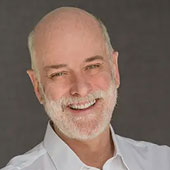 How exactly will we feed the additional 2 billion people expected to walk the planet in 2050?
That question is central to The Future of Food and Agriculture taught by David Donnan in Northwestern's Master of Science in Energy and Sustainability (MSES) program. MSES is jointly offered by Northwestern Engineering and the Paula M. Trienens Institute for Sustainability and Energy.
It’s not an easy question to answer, even for someone with Donnan’s experience. He is a partner emeritus at Kearney consulting firm, a board member with the Foundation for Food and Agriculture Research, a mentor with the Creative Destruction Lab, and has more than four decades of professional experience in the food and agriculture field.
“The global nature of our food system and the interdependency is becoming very important,” Donnan said. “Can we feed the world? That’s a big question when the prediction is for a population approaching 10 billion people by 2050.”
Donnan’s course is the second of a two-course sequence that begins with Sustainable Food (a prerequisite for Donnan’s course). While that course helps students understand the modern food system and the sustainability challenges it faces, The Future of Food and Agriculture asks them to imagine and critically evaluate what comes next. The course extends the conversation from analyzing today's sustainability challenges to exploring the forces that will shape how the world feeds 10 billion people.
The course emphasizes strategic decision-making in an increasingly complex environment and examines both successful and unsuccessful innovations to better understand the technical, economic, and societal factors that influence our global food systems.
These include shifting demographics, increasingly volatile weather patterns and natural disasters, and growing customer demand for their favorite fruits and vegetables year round. These changes have bound the food supply to the ever-shifting geopolitical attitudes toward trade.
“We've lost sight of the whole idea of seasonality in food,” he said. “We expect to get asparagus or strawberries in February. That strawberry isn’t coming from Michigan, and it might not even be coming from California. Our food choices are based on an interconnected global system. That's why trade issues have become so important.”
In other words, if your citizens expect to enjoy fresh asparagus with their steak in December, you better have good relationships and favorable trade practices with the regions where asparagus can actually grow at that time of the year.
On top of that, part of the issue is the steak itself, or, rather, what the steak represents – a shift in demographics.
Globally, the middle class is growing. As people move up the economic ladder, they tend to eat more proteins, as well as more processed foods. This puts an increasingly glaring spotlight on the environmental impact of farming, ranching and food processing.
Donnan’s MSES class provides a deep dive into all of these issues.
“The No. 1 goal is to help students understand the complexity of the global food system and to examine some of these challenges we are going to have over the next 20 to 30 years,” he said. “What are the things that are going to help us or hinder us in our ability to feed a population of 10 billion people?”
Donnan's eclectic background in food and agriculture has prepared him to help MSES students try and answer these questions.
Born in Canada, Donnan's done everything from running a meat plant to consulting for the world’s largest multinational food companies, including ConAgra, General Mills, Kellogg's, Nestle, and Pepsi. He's helped Las Vegas casinos more sustainably source their world-famous buffets and smaller mom-and-pop cafes find ways to be more economical with their purchases.
His experience taught him that agriculture can be a double-edged sword — both the source and solution to environmental problems.
“Agriculture generates greenhouse gases and methane from cattle, its land use and some of the agricultural production methods we're using,” he said. “But it also sequesters carbon into soil by the right type of agricultural regenerative farming techniques.”
That truth provides the foundation for many of his MSES in-class lessons. Donnan, who has taught the class since August 2020, continues to be impressed by his students’ abilities to find workable solutions.
“I’ve learned as much as the students do because they will bring a different perspective on our food culture,” he said. “The enthusiasm of the students and their willingness to ask questions is contagious.”