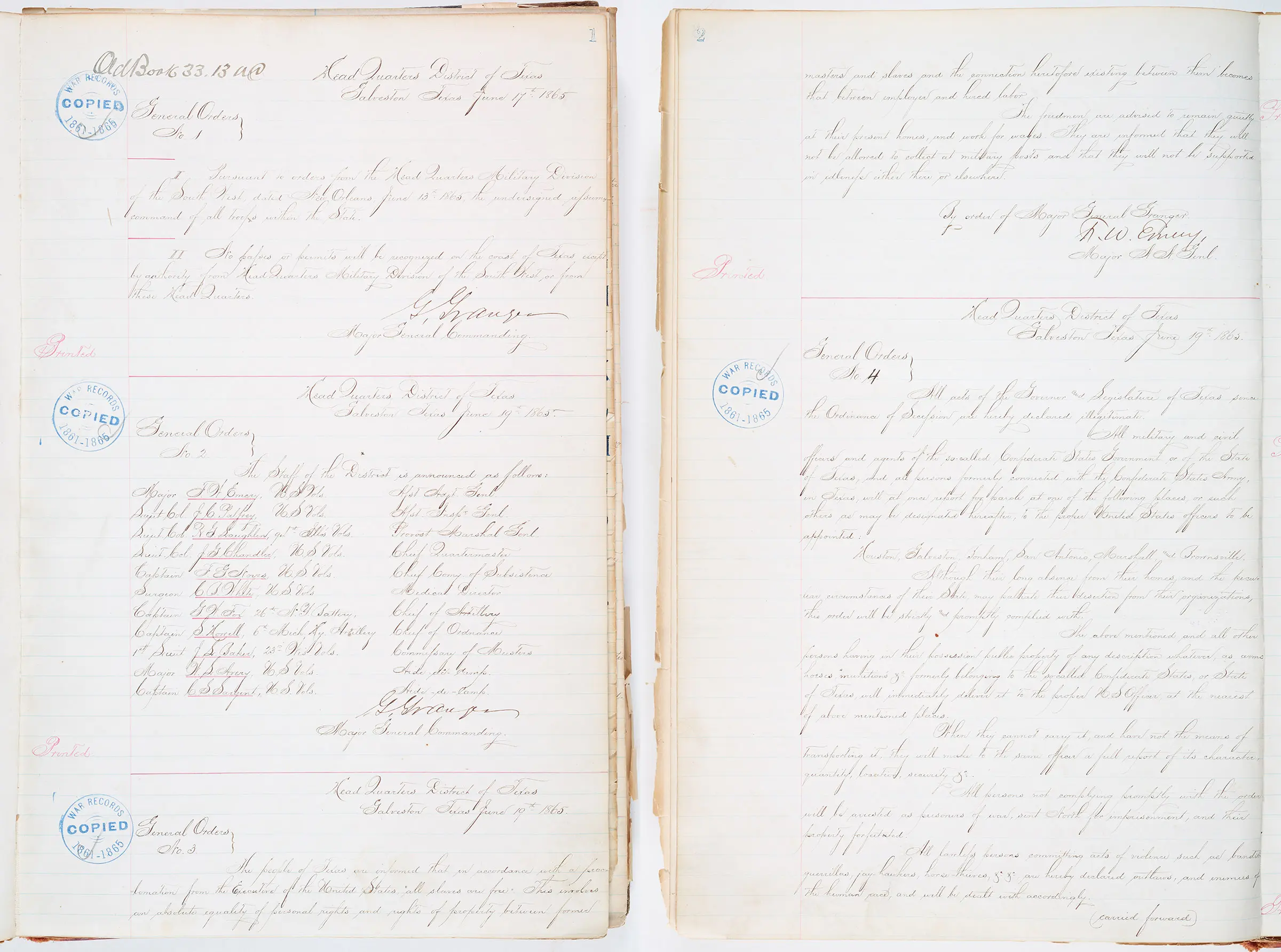
"The people of Texas are informed that, in accordance with a proclamation from the Executive of the United States, all slaves are free. This involves an absolute equality of personal rights and rights of property between former masters and slaves, and the connection heretofore existing between them becomes that between employer and hired labor. The freedmen are advised to remain quietly at their present homes and work for wages. They are informed that they will not be allowed to collect at military posts and that they will not be supported in idleness either there or elsewhere."
Juneteenth Annotated Resources 2026
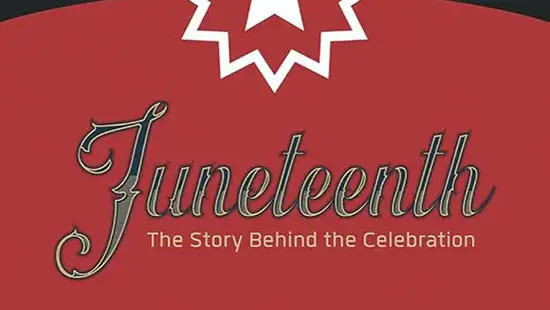
Juneteenth: The Story Behind the Celebration Edward T. Cotham
A deep dive into the history of Juneteenth. Using decades of research in archives around the nation, this book helps separate myth from reality and tells the story behind the celebration in a way that provides new understanding and appreciation for the event.
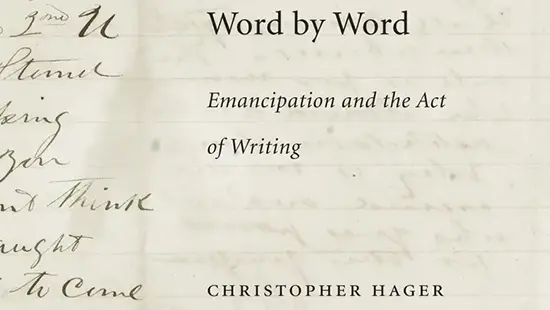
Word by Word: Emancipation and the Act of Writing Christopher Hager
An examination of the letters, diaries, petitions, and other writings by newly literate Black Americans pre- and post-emancipation.
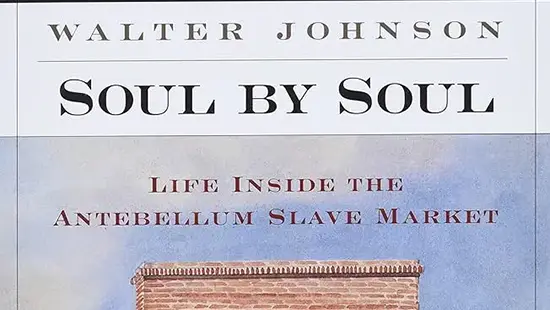
Soul by Soul: Life Inside the Antebellum Slave Market Walter Johnson
Soul by Soul tells the story of slavery in antebellum America by moving away from the cotton plantations and into the largest slave market in the nation.
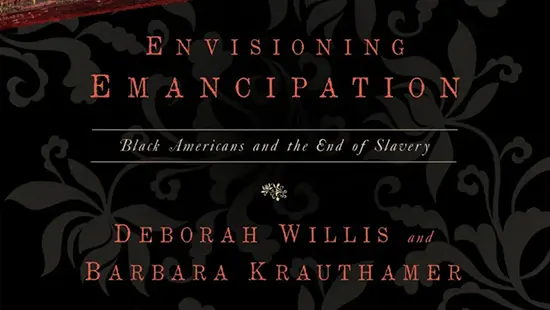
Envisioning Emancipation Black Americans and the End of Slavery Deborah Willis, Barbara Krauthamer
Collection of over 100 photographs from between 1850 and the 1930s documenting the lives of emancipated Black Americans.
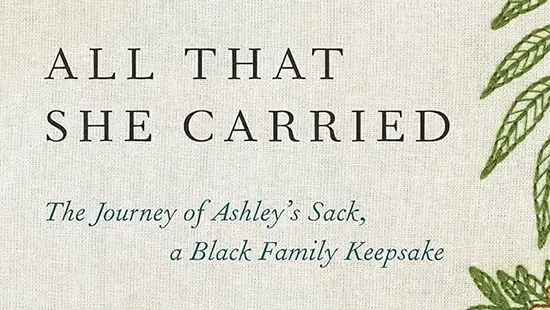
All That She Carried: The Journey of Ashley's Sack, a Black Family Keepsake Tiya Miles
Starting with an embroidered cotton sack, historian Tiya Miles works against archival silences to uncover a multigenerational story of loss and love, spanning from enslavement to the present.
Juneteenth: The Story Behind the Celebration: Edward T. Cotham
Word by Word: Emancipation and the Act of Writing: Christopher Hager
Soul by Soul: Life Inside the Antebellum Slave Market: Walter Johnson
Envisioning Emancipation Black Americans and the End of Slavery: Deborah Willis, Barbara Krauthamer
All That She Carried: The Journey of Ashley's Sack, a Black Family Keepsake: Tiya Miles
Read the book/ Watch the documentary
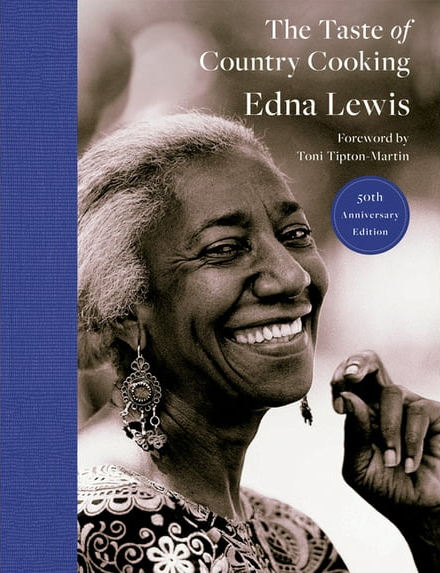
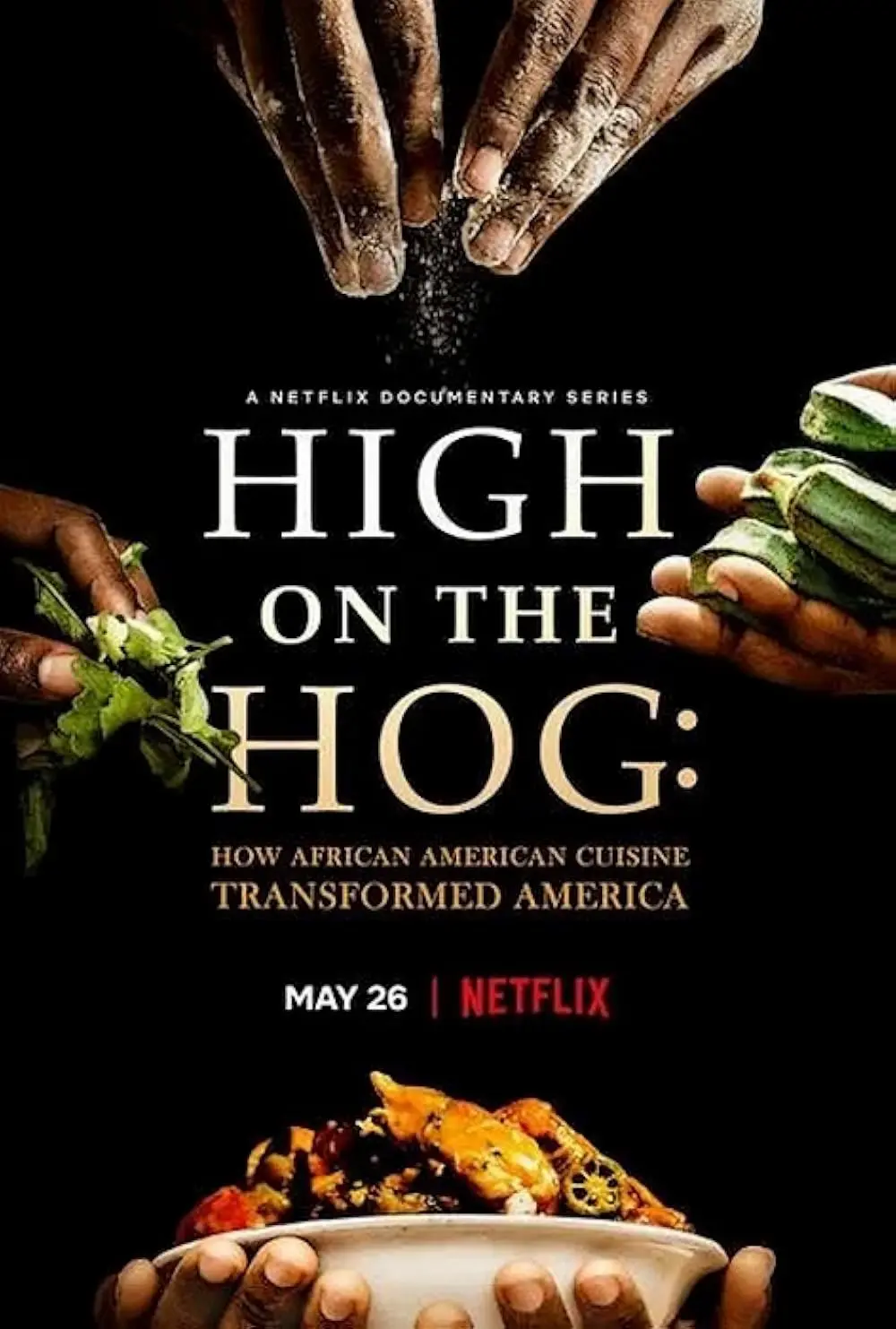
This classic Southern cookbook and Netflix original documentary (based on a nonfiction book) pair perfectly as guides to celebrate and explore the richness of Black American culinary traditions.
The Book:
The Doc:
The Taste of Country Cooking Edna Lewis
High on the Hog Stephen Satterfield, Jessica B. Harris
Websites
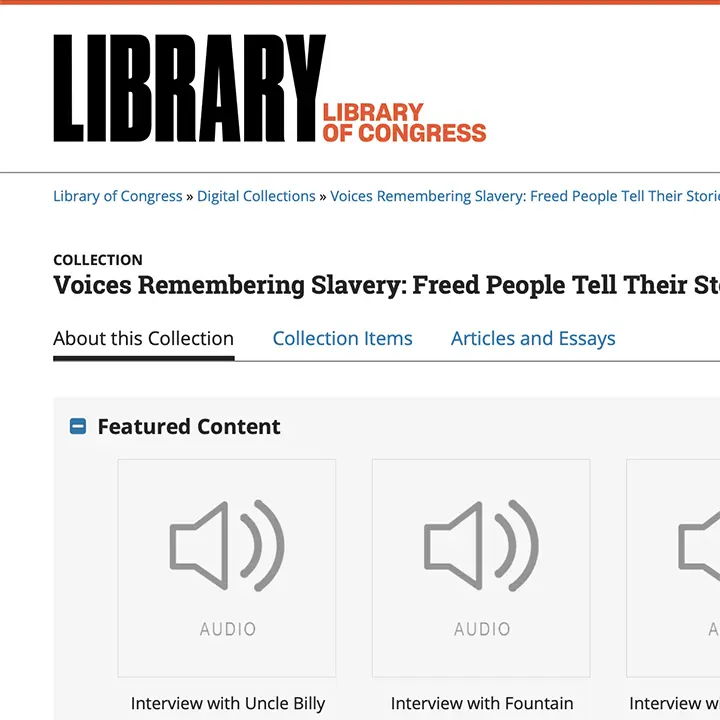
Voices Remembering Slavery: Freed People Tell Their Stories
A collection of 66 digitized recordings of interviews with formerly enslaved Black Americans narrating their experiences of enslavement and emancipation recorded between 1937 and 1975. See also: Faces and Voices from Presentation, a digital exhibit that features photographs of several interviewees.
- The Library of Congress
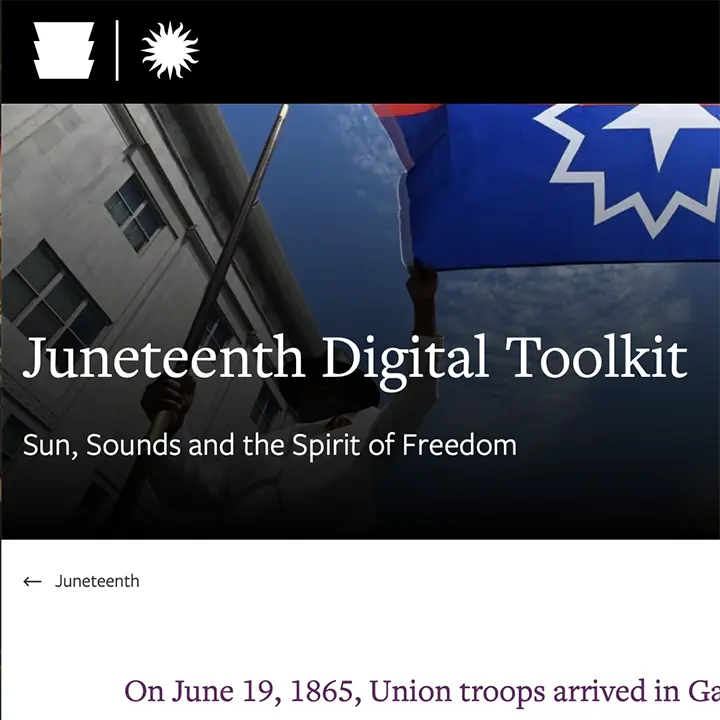
National Museum of African American History and Culture Juneteenth Toolkit
This digital toolkit includes short films, a reading list for children, recipes, playlists, downloadable infographics, and much more. If you're looking for a way to give back and learn more about Black Americans' experiences with emancipation, follow the link at the bottom of the page and volunteer to transcribe the records of the Freedmen's Bureau online.
About Yujay Masah
Yujay Masah (she/her) is the Black Studies Librarian at Northwestern University. She holds an MA in Public History from Loyola University Chicago and an MLIS from Dominican University. Her professional and research interests include American history, Black history, collective memory, material and visual culture, and archival studies. If you have any questions about accessing any materials mentioned in this pamphlet, please reach out to her at: yujay.masah@northwestern.edu