Vocal Health
WAVE Sensors for Advanced Voice Care
LEAD: Theresa Brancaccio, MMus, Voice Expert, Operatic Performer, and Professor of Instruction, Bienen School of Music
Base Technology: Mechano-acoustic sensor, published 2020
Technology status: Manufacturable prototypes, software
Clinical status: Pilot studies
Clinical interface: Otolaryngology Head & Neck Surgery
Possible commercial path: Sibel Health
Clinical Participants: Theresa Brancaccio, MMus; James Burns, MD, FACS; Aaron Johnson, PhD, CCC-SLP, New York University
Engineering Participants: QSIB and QSI-TEAMS
Clinical Goal: Enroll ~200 study subjects with vocal disorders
Engineering Goals: (1) Validate technology, (2) Develop ML algorithms
Collaborative Goals: (1) Establish home use, (2) Demonstrate remote care, (3) Validate sensor data with gold standard acoustic and aerodynamic measurements during patient diagnostic exams, (4) Evaluate how sensor data aligns with clinical diagnoses.
Outcome: Publication in a top clinical journal; IP protection
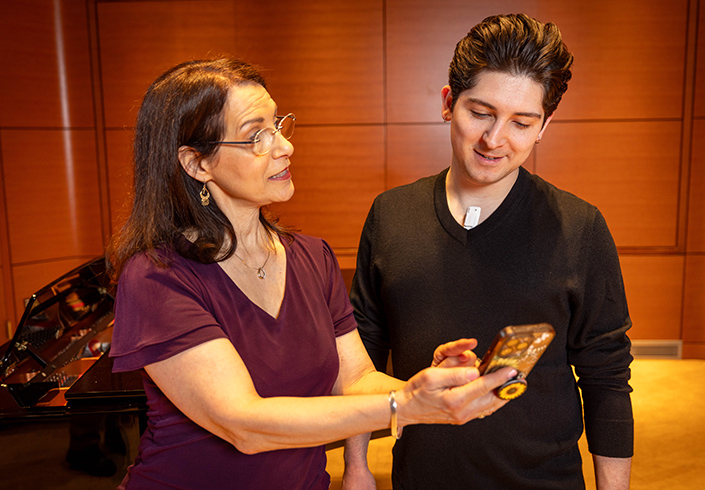
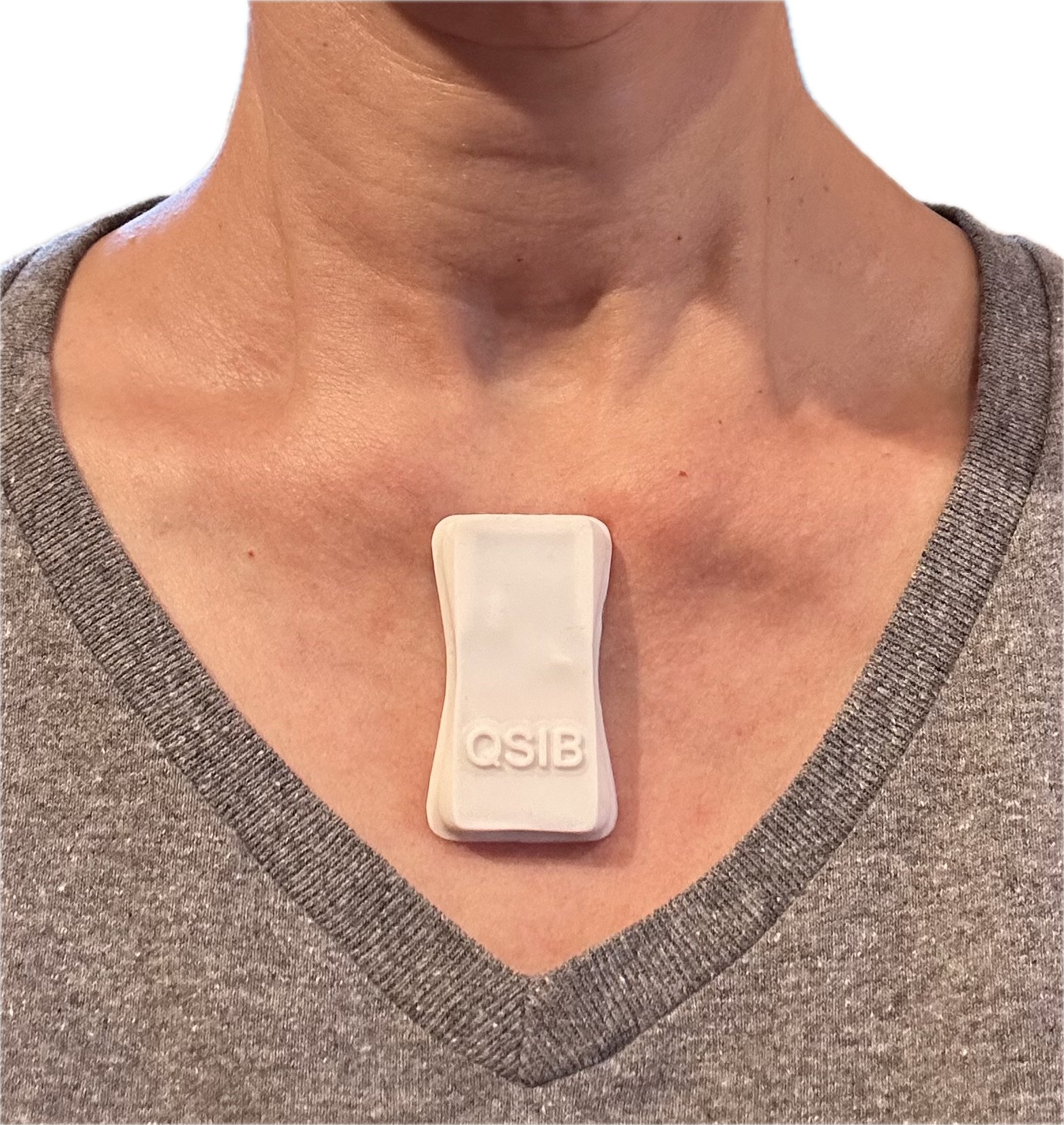
We have developed the first smart wearable that continuously measures voice use and quality, with the goal of helping users manage their vocal health and potentially reduce the risk of fatigue or injury. This soft, flexible, small, and wireless sensor adheres comfortably to the upper chest, capturing vocal vibrations and instantly calculating real-time and cumulative voice use. Using advanced algorithms, it tracks and detects changes in voice quality and can deliver immediate feedback through haptic alerts and mobile notifications through a smartphone connection, empowering users to maintain healthy vocal habits.
Designed for anyone who relies on their voice professionally or personally, the technology opens opportunities for clinical care, providing objective data for more targeted voice habilitation and rehabilitation. Additional applications include improving surgical recovery for vocal injuries; helping individuals with hearing loss regulate vocal volume; assessing how radiation affects voice use in laryngeal cancer patients; monitoring changes in Parkinson’s voice profiles to track medication effects; supporting voice therapy goals to speak louder for Parkinson’s patients (LOUD and SPEAK OUT therapies) and encouraging increased vocalization in older adults to reduce age-related vocal decline.
"Vocal health research bolstered through new Northwestern institute" Fanfare Summer 2026