Learning and Teaching
How we are bringing new ideas to education

Northwestern is preparing students to shape the future of AI and their own future in the age of AI. Our courses and programs provide opportunities to understand AI in depth and innovate in new directions while maintaining what is core to a Northwestern degree: critical thinking, rigor, engagement and creativity.
Northwestern offers a growing range of academic programs that provide pathways for developing AI expertise. Whether building intelligent systems for transformative medicine, crafting new music with AI tools, or spearheading new uses across disciplines, students are learning foundational skills for the future.
Undergraduate
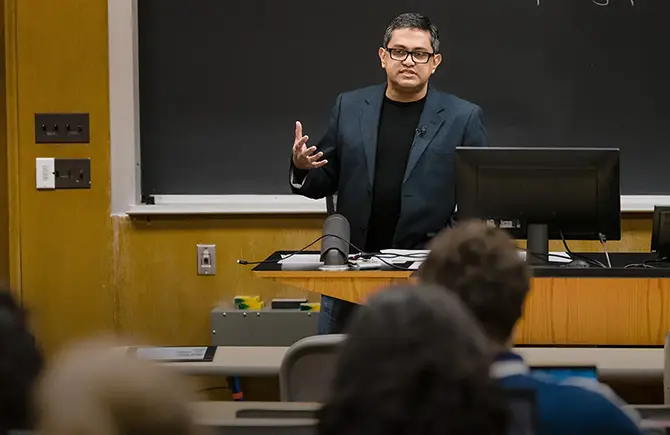
McCormick School of Engineering’s new major gives students rigorous training in AI, machine learning, algorithms and natural language processing while also emphasizing the societal dimensions of AI. Students from any Northwestern school can add AI as a second major, pairing it with almost any field.
Undergraduate
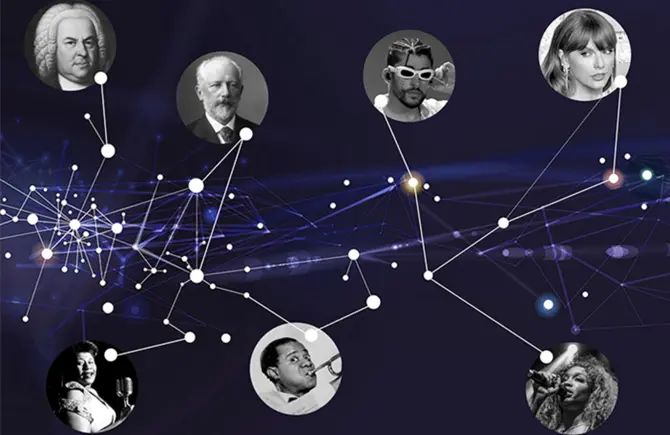
Jointly offered by Bienen School of Music and McCormick School of Engineering, this certificate explores how AI can shape the creation and experience of music. Through coursework in computer science and music theory and cognition, students develop technical skills in AI and machine learning and apply them to music.
Graduate
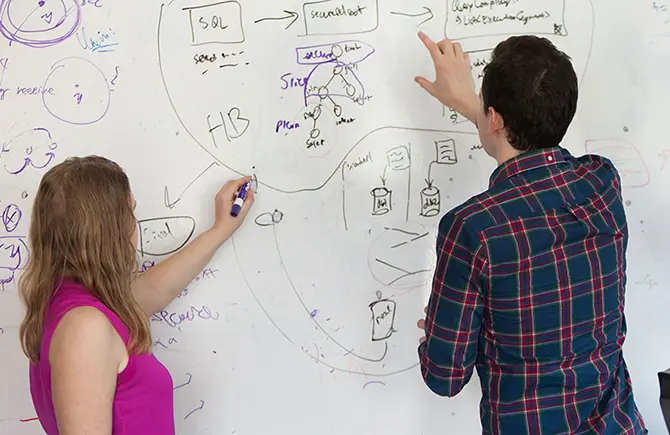
McCormick School of Engineering’s MSAI combines technical training with study of the human, design and organizational contexts in which intelligent systems are used. Students connect AI to real-world applications and apply their skills in an industry capstone.
Graduate
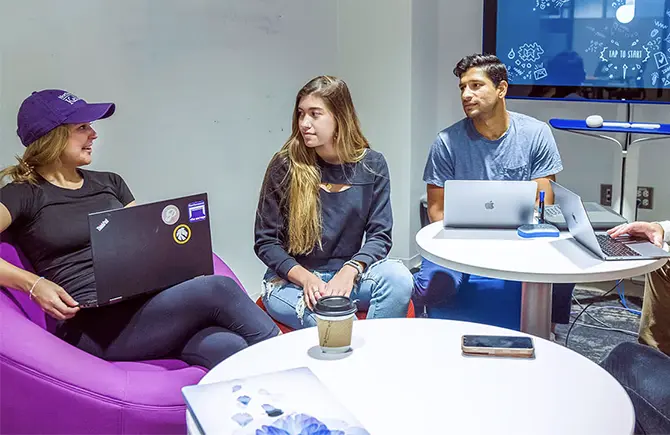
A joint degree offered by Kellogg School of Management and McCormick School of Engineering, the MBAi combines business strategy, technical training and hands-on experience. It prepares business leaders to navigate the intersection of business and AI-driven technology.

Artificial intelligence hasn’t changed Northwestern’s commitment to interdisciplinary collaboration; it’s creating new opportunities to bring fields together.
The MSAI program’s MSAI+X track is an innovative 12-month program designed for professionals who already hold an MD, PhD or JD and want to bring AI into their existing field. Its graduates will use AI to transform science, law, the humanities and beyond.
Northwestern faculty are reimagining approaches to student engagement, assessment and fundamental learning in an age of new teaching challenges and exciting possibilities.
The AI & Education Advisory Committee brings together faculty and academic leaders to consider how AI is changing teaching, learning and assessment at Northwestern. Its work includes supporting faculty, developing responsible approaches to AI in the classroom, and helping students build the skills to use these technologies.
The Education pillar of the Northwestern Network for Collaborative Innovation seeks to develop a distinctly Northwestern curriculum that equips students in all fields with the ability to meaningfully leverage these powerful systems. This year, NNCI is partnering with the Office of Undergraduate Education to offer The Provost’s Award for Teaching Innovations in the Age of AI, which supports ambitious efforts to reimagine teaching in the age of AI and foregrounds assessment of student learning in new or ongoing teaching approaches.

Northwestern IT offers a range of teaching resources, including sample language for a course AI policy, guidance on building an AI activity that serves course learning outcomes and more.

The Searle Center's generative AI resources include guidance on determining course-specific approaches to AI based on learning objectives and support for redesigning assessments.

Teaching and Responsible AI Literacy (TRAIL) Guides are undergraduates trained to consult with instructors, develop AI literacy materials and conduct outreach.