Frameworks and Tools for Interrupting Harm Workshop with Shá Norman
Inclusion is a skill, not a attitude ”
Andres Tapia
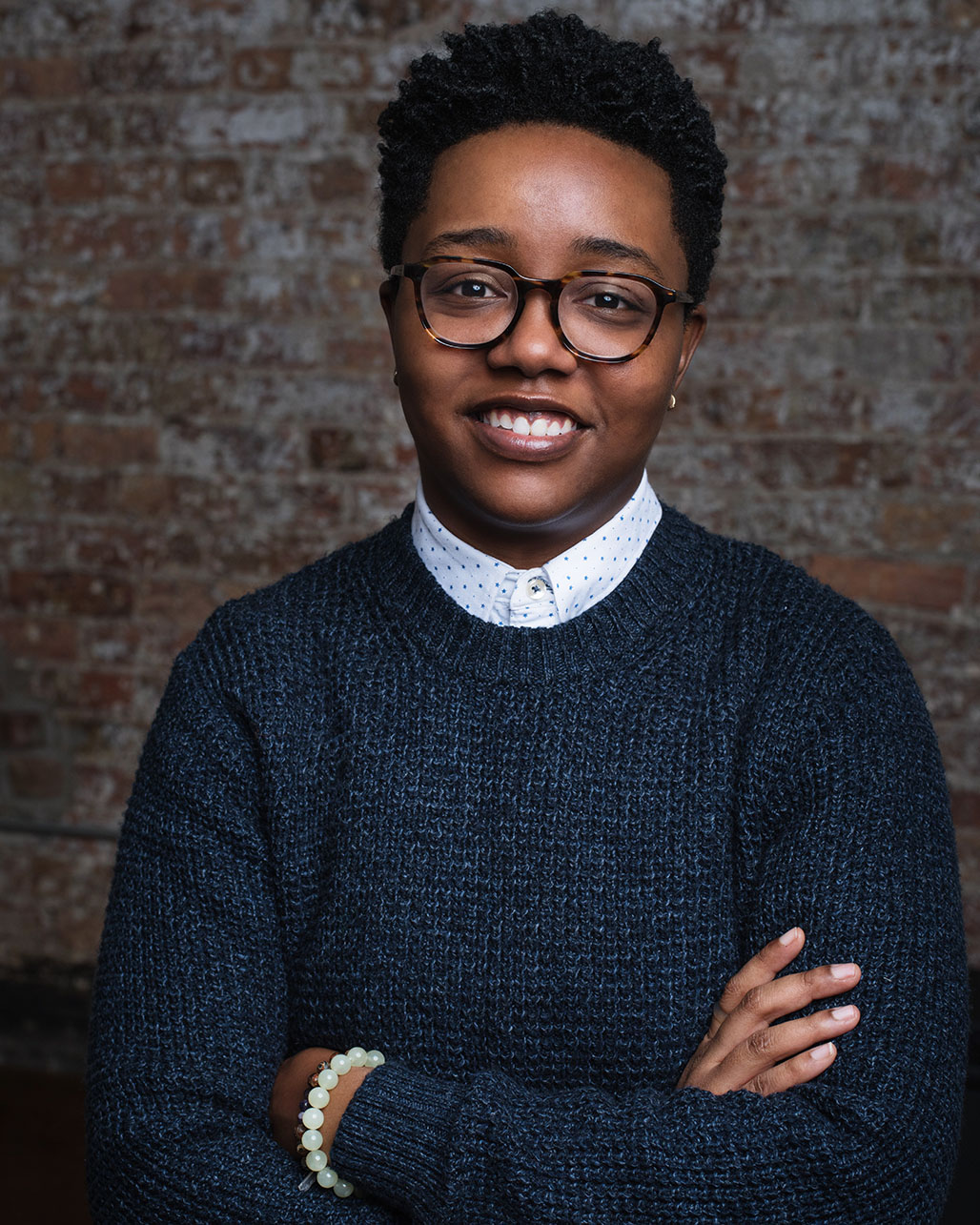 On November 12th, the CRS community participated in a workshop facilitated by Shá Norman, the Equity Outreach and Education Coordinator at Northwestern's Office of Equity. The objectives of the workshop were to explore the concepts of power, privilege, and microaggressions. Shá took an interactive approach to educate our students and faculty on power, how it manifests in learning skills, and how we can build skills to identify and interrupt the harms we may observe. They began with gauging our community member’s comfort with identifying and interrupting microaggressions, everyday interactions that intentionally or unintentionally reinforce an individual's status within a system of oppression, stereotyped assumptions, or biases. As our group concluded, there are two notable points within this definition: microaggressions come from privileged groups but can include colorism and unintentional actions that are associated with privilege in society. Collectively it was observed that identifying and interrupting microaggression is a scale, often dependent on our environment, company, and the particular moment in time.
An important aspect to the workshop was Shá’s activity on dissecting and interpreting the Pyramid of Violence,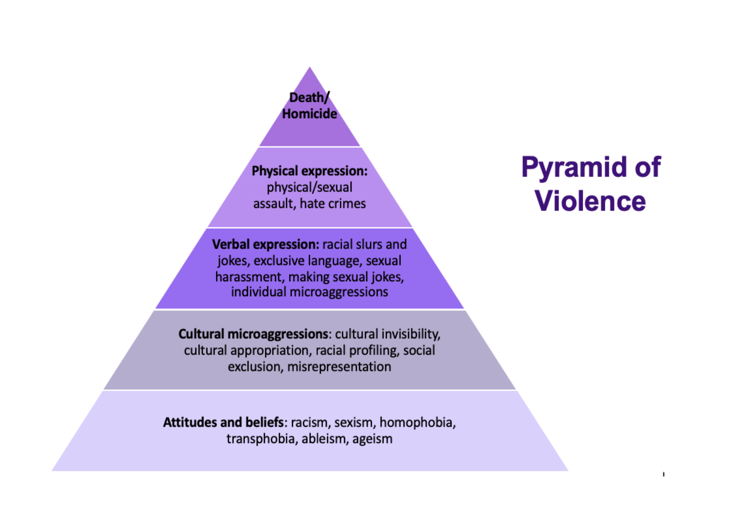 a graphical representation of a continuum of behaviors that contribute to harm. Community members in breakout rooms discussed the figure and the thought-provoking conversation brought to light that socialization in our society can stratify those that are privileged and benefit from racism, sexism, homophobia, transphobia, ableism, and ageism from those who suffer from it. Towards the apex of the pyramid less focus is on beliefs or attitudes in our society but rather the physical manifestations of an individuals' beliefs in their superiority. But what about intervention to defray these aggressions? Shá explained that individuals are more likely to intervene when the violence is visible (verbal or physical expression). However, fewer will either take notice or intervene when actions are less visible, leading to a perpetuation of harm in our society. Shá’s advice to our community was to put in place crucial intervention strategies to utilize in our journey to education on inclusion:
- Ask Questions: follow up potential microaggressions with additional questions "What do you mean by that?"
- Direct Statements: use "I" statements when addressing microaggressions "I am not comfortable with that." "I do not think you should…."
- Delegate: divide and conquer
- Delay: follow up with explanations. "That really bothered me. Here is why…."
Shá made clear that our communities’ path to education on inclusion is a life-long commitment that must be constantly maintained. Inclusion is a state of consciousness and, depending on our own identities, we experience/define inclusion and exclusion differently. Therefore, these mindful and often uncomfortable conversations are essential to continue our independent growth and the growth of our Northwestern community. We look forward to continuing our education with further workshops led by Shá Norman.