CRS Scientist Spotlight on Manuel Torres-Vélez
The CRS provides a niche for you regardless of your previous academic preparation or credentials. This allows you to learn and stay up to date on everything that is being done in the field and encourages the reproductive field itself to be an interdisciplinary science.”
Manuel Torres-Vélez
Manuel Torres-Vélez is a second year MS-RSM student in Dr. Kara Goldman's lab. His thesis research focuses on the role of the mTOR pathway in accelerated ovarian aging.
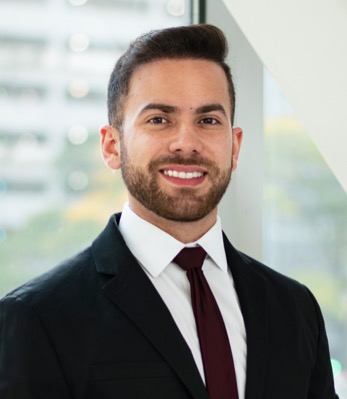
Thesis mentor: Kara Goldman, MD
Thesis title: Determining the Role of the mTOR Pathway in Accelerated Ovarian Aging
What brought you to join the CRS community and what is your current position?
I am a second-year thesis track student in the Masters in Reproductive Science and Medicine program. I joined the CRS through the master’s program, but what brought me to the community in general was a thirst for knowledge in the reproductive field.
Could you describe your research?
The main objective of my research is to determine the potential role of the mTOR pathway as well as changes in the ovarian stroma in the early depletion of the ovarian reserve seen in BRCA mutation carriers.
To serve this patient population with the best chance for family building, we need to understand the etiology behind ovarian reserve depletion compared to the general population. Through this research we will be able to better educate these patients on their family building time constraints, determine potential drug targets to slow this outcome, and establish the best age range for these patients to preserve fertility or conceive naturally.
In addition, since this signaling pathway has multiple roles in the human system, its alteration could translate into a systemic representation. For example, upregulation of the mTOR pathway has been associated with malignancies and physiological aging. If our findings show that in fact this pathway is upregulated, it could represent information about the pathophysiology of malignancies associated with BRCA mutations, and the general health of these patients.
What aspect(s) of CRS do you find most valuable?
What I think is most valuable about this community is its diversity. This not only goes for the individuals who are part of the CRS who come from very different backgrounds, but also the research. The CRS provides a niche for you regardless of your previous academic preparation or credentials. This allows you to learn and stay up to date on everything that is being done in the field and encourages the reproductive field itself to be an interdisciplinary science.
What has been the most valuable aspect to your training as a reproductive scientist?
The most valuable aspect to me has been the incredible mentorship. I have been able to work with outstanding scientists and learn so much from them. Through this mentorship, I have collaborated with other trainees which has helped me learn from their areas of expertise.
What is one piece of advice you would give to young scientists starting in their journey in science?
Science can be frustrating, and it will be! It’s just a part of the process, and you need to make peace with it. Remember that behind every frustration there is a window of knowledge waiting to be opened. Everything will work out in the end if you are meticulous and rigorous with your work.
What do you think will be the next big contribution in the reproductive biology field?
Oh wow, so many! Something that we don’t think about frequently is that the field of reproductive science and medicine is relatively new and has grown exponentially in a small amount of time. The first IVF baby was born only 43 years ago!
I truly think that we are on the verge of discovering ways to preserve fertility in females. I say “ways” because scientists are looking at this from different perspectives which really talks about the level of scientific collaboration in this field. Can’t wait to be in a world where women have absolute control of their reproductive decisions and timelines, and most importantly where they can have greater quality of life throughout their lifespan!
What hobbies do you have outside of the lab?
I really enjoy listening to audiobooks and working out. I am also very passionate when it comes to wellness, I love to explore new ways to stay healthy and fit and to incorporate them into my lifestyle.