Alumni Spotlight on Victoria Bakaturski
“The MS-RSM program has given me the opportunity to turn my dreams into goals. I will forever be grateful for the education, experiences, and life lessons that I’ve gained throughout this program. ‘Education is the most powerful weapon which you can use to change the world.’ -Nelson Mandela” ”
Victoria Bakaturski
Victoria (Vicky) Bakatruski, MS, is a class of 2020 graduate of the MS-RSM program. She conducted research with Dr. Pamela Monahan on understanding Notch and Activin signaling pathway interactions in ovarian granulosa cells. After completing the rigorous master's studies, Vicky is applying for positions in fertility clinics where she hopes to work as a clinical embryologist.
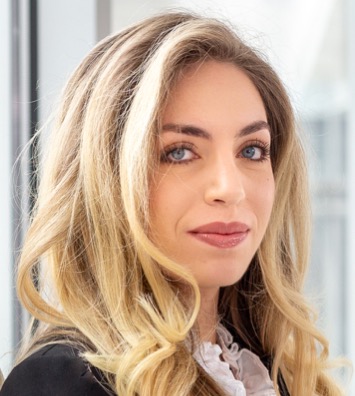
Name: Victoria Bakaturski, MS
MS-RSM Class of 2020
What initially drew you to the MS-RSM program?
Reproductive science is something I have been interested in from early on in my science education. I focused much of my undergraduate time studying development and physiology and maternal health and reproduction, and realized I really loved this field of science. Human reproduction is truly an incredible thing. After spending a summer interning at an IVF clinic and laboratory, I recognized that my passion lied in reproductive science. I wasn’t sure what to do, though, because reproductive science is quite a specific field of study to go into. I found the MS-RSM program at Northwestern University after doing some research, and was instantly drawn to it. This program offered everything I was looking for, and was one of a kind in the whole nation. I knew that this unique opportunity to immerse myself in reproductive science in both research and clinical settings with experts in the field was exactly what my next step needed to be.
Which course(s) did you find most valuable to your training as a reproductive scientist?My favorite courses in this program were the Female and Male Physiology and Endocrinology courses led by Dr. Monahan. They were vital for establishing a solid understanding of both the female and male reproductive systems for the subsequent classes we took throughout the year.
Which event(s) did you find most interesting and/or valuable?
I really enjoyed the wide range of events that were provided to us throughout the program, but I found the weekly RRU updates most valuable. It was always an interesting experience to hear about the ongoing research that everyone was conducting. It was also a great opportunity to learn about new topics within reproductive science that I wasn’t aware of previously.
How do you feel you have changed the most during your time in this program?
I definitely feel that I have grown immensely throughout the course of the MS-RSM program. I have become a stronger person, and most importantly, I’ve gained so much confidence in my abilities as a scientist.
What advice would you give to current applicants as well as current MS-RSM students?
I would tell future applicants to just go for it, and take advantage of every opportunity that is given. The MS-RSM program does an incredible job of giving its students many opportunities including access to exclusive lectures, networking events with experts in the field, opportunities to join research projects or create new studies, volunteering, shadowing, and so much more. The program is designed for you to succeed, and it’s up to you to get the most that you can out of it.
What are your future plans?
I am currently applying to embryology positions in fertility clinic labs. I am really looking forward to gaining hands on experience in the clinical laboratory. I see myself striving for a PhD down the line as well. Throughout this program I have learned that it takes an immense amount of collaboration and innovation to produce the technology necessary for furthering the field of reproductive science and medicine. Infertility is not going away, and while many incredible technologies exist that allow people to have biological children, there are also many limitations and unknowns. I feel very passionate about creating new science that allows reproductive medicine to reach more people, and I hope that one day I can contribute to the advancement of this field.
Could you describe the research you conducted in the program?
I worked on a project that Dr. Pamela Monahan started titled "Investigating Signaling Pathway Interaction Between Notch and Activin in Ovarian Granulosa Cells." Dr. Monahan’s previous research has indicated that the Notch and Activin signaling pathways do interact in the granulosa cells, and we hypothesize that they interact at the level of gene expression. The focus of my work has been analyzing the promoter regions of target genes of each of the pathways, in order to gain insight into the mechanisms of interactions between Notch and Activin signaling.