T32 Trainee Reflects on Year 1 of the Training Grant
The CRS training grant not only provides monetary support, but provides access to different lectures and seminars that allow you to explore different areas of reproductive sciences that you might not have much experience with. These... have provided me with a background understanding that I don't get from my training as a biomedical engineer, and have proven to be invaluable when conducting research.”
Jen Zhu
The Center for Reproductive Science is excited to announce that we are accepting applications for year 2 of our T32 Predoctoral Training Program in Reproductive Science, Medicine, and Technology. This opportunity offers up to two years of funding, advanced topic coursework in reproductive science and medicine, career and professional development events, support for conferences and meetings, tailored internships/externships, and the historical intellectual hub of the Center for Reproductive Science.
We are currently accepting applications for two predoctoral trainees entering their 2nd or 3rd year of doctoral graduate studies in programs, including Biomedical Engineering, Chemistry, DGP, IBiS, MSTP, and NUIN.
Applications are due on July 1, 2020. Questions and inquiries are welcome to Dr. Pamela Monahan.
Want to learn more about the training grant? Check out this interview with current T32 trainee, Jennifer Zhu:
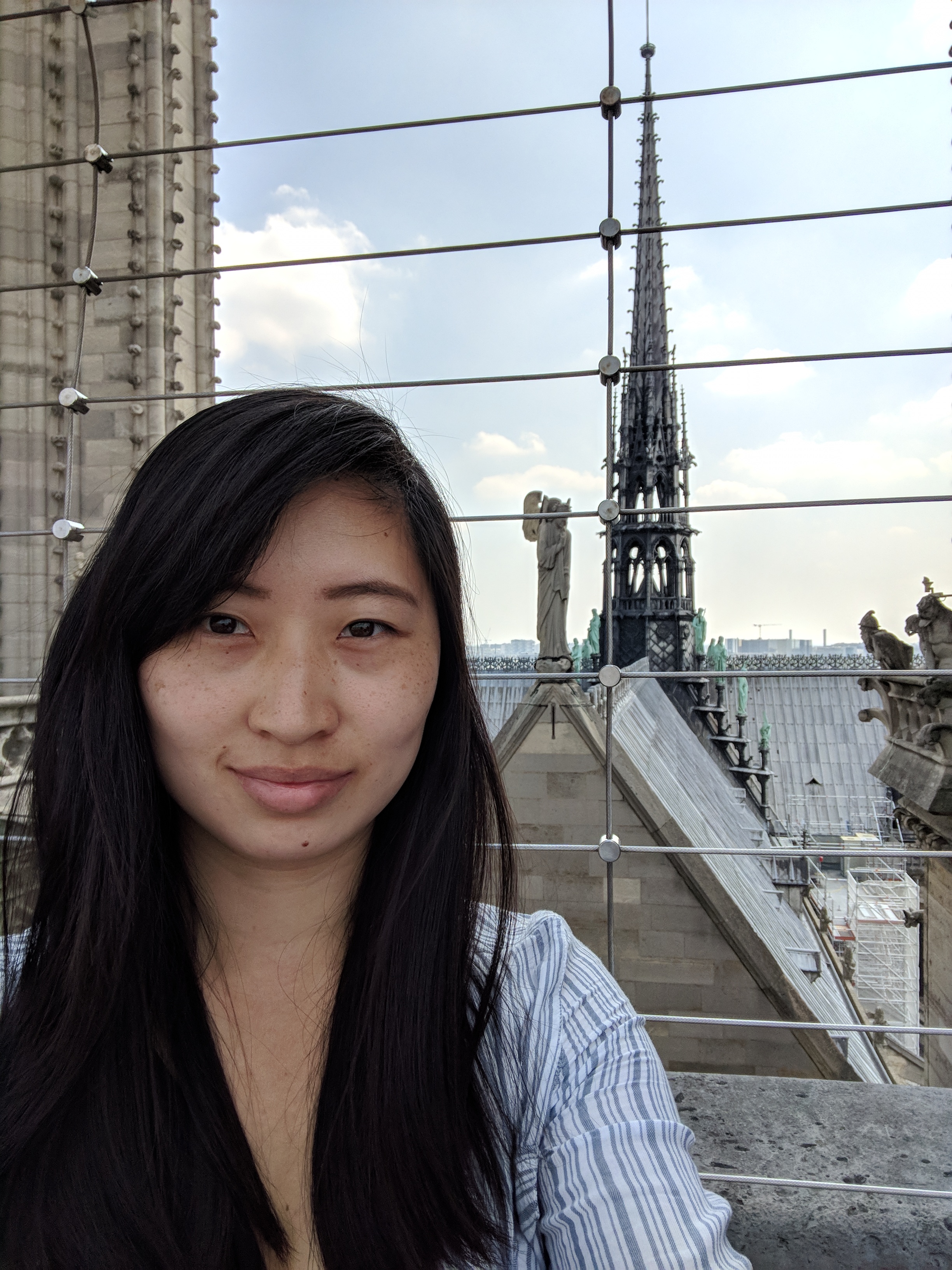
- What initially inspired you to apply to graduate school?
I have spoken to many counselors and mentors over the years in industry, academia, and government. I have been advised that for doing research in biological sciences, getting a graduate degree would be very helpful in prospective job opportunities.
- Why the interest in research broadly and, specifically, reproductive research?
I became interested in biomedical engineering in high school due to my high school biology teacher, Dr. Strode, who introduced me to the possibility of combining my interests in biology and engineering, which was a new concept to me at the time. During my undergraduate studies, one of the main lessons that I learned was that it is imperative, when solving a problem, to pinpoint that problem and move forward to solutions. This is the reason I conduct research the way I do now. I saw a need in reproductive research that wasn't being met, and saw an opportunity to pursue that.
- Could you provide a title and a short description of your project(s)?
I have two main projects that I am working on for my PhD. Within the realm of reproductive sciences, here is my title and description:
Immune modulation treatments and vaccines using PEG-PPS self-assembling nanocarriers: a treatment for endometriosis
I aim to develop a mouse model that will allow for in vivo monitoring of endometriosis lesion growth. Using this mouse model and anti-inflammatory and tolerogenic drugs loaded into PEG-PPS self assembling nanocarriers, I plan to test different treatment avenues for reducing endometriosis lesion size.
- What do you enjoy the most about working with your PI?
Dr. Evan Scott is always incredibly enthusiastic about testing new ways in which our PEG-PPS nanocarriers, the bread and butter of our lab, can be utilized to treat different conditions. His drive and excitement for expanding our lab's abilities always keeps us on our toes.
- How did involvement with CRS/T32 aid your academic and professional development? Were there any events or CRS-related programs of note that helped?
The CRS training grant not only provides monetary support, but provides access to different lectures and seminars that allow you to explore different areas of reproductive sciences that you might not have much experience with. These and the reproductive sciences class (REPR_SCI 406 - Emerging Research in Reproductive Sciences) have provided me with a background understanding that I don't get from my training as a biomedical engineer, and have proven to be invaluable when conducting research. The wide variety of possible careers covered by the Career Catalyst has also informed my choices in possible ways forward.
- As far as graduate school is concerned, were there any courses, organizations, or events that you found the most formative towards your current research and goals?
I have greatly appreciated that graduate school has provided the opportunity to branch out from my previous work and go off to new directions. And with this freedom, I have been able to take classes that give me a formal training in fields that I had previously not been educated in, like immunology and reproductive sciences. I have also really enjoyed going to different seminars, which provides a platform for discussing science, asking questions, and networking.
- What is next for you academically and professionally?
I am still unsure about what I plan to do next, other than research, I have been considering avenues that have more to do with science advocacy, which I believe is sorely needed in this climate.
- What advice would you give to people who are thinking about grad school and PhD programs?
I would advise incoming students to make informed decisions about the lab they plan to join. They will be working with these people for the foreseeable future, and it is important that they ensure that their mental health, along with their research, are cared for.
- What are your future academic and career plans?
As I finish my final class for my PhD, and take quals in the coming month, I plan to delve further into my research with my newfound time. As for my career pans, that is still up in the air.
- How have you been spending your time during the COVID-19 pandemic?
I have been cooking and baking quite a lot, and taking care of my little indoor jungle. I've recently gotten one of my orchids to bloom, although honestly I have no idea how I did that. I've also been taking a lot of online instructed work out classes provided by my climbing gym, First Ascent! They're free for anyone if they want to try it out.


