CRS Scientist Spotlight on Shweta Dipali
Reproductive Research Updates has given me insight into the breadth of research being performed by the CRS community and exposed me to areas of reproductive science that I was not familiar with.”
Shweta Dipali
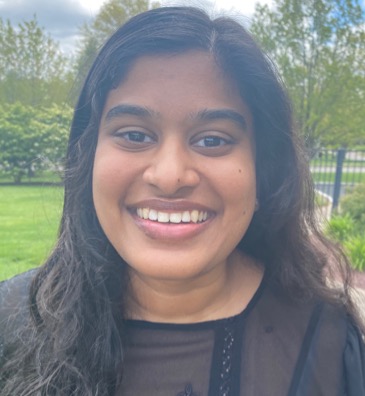
Name: Shweta Dipali
Position: DGP PhD Student and CRS Training Program Trainee
Mentor: Dr. Francesca Duncan, PhD
Thesis: Ovarian Inflammaging as a Mechanism for Ovarian Cancer
What initially inspired you to apply to graduate school?
Research was a defining part of my undergrad experience. I worked in a cell biology lab and my PI encouraged me to be an independent scientist early on. I loved the process of asking scientific questions and designing experiments to test them. By the end of college I could envision myself working in a research lab full-time and to this end, graduate school was the next step.
Why the interest in research broadly and, specifically, reproductive research?
I started college with no inclination towards research, I was actually enrolled in the business school for my first year. After taking an introductory biology class, I thought that research would be a fun way to spend a summer. I ended up loving it, switched my major, and here I am!
As for my interest in reproductive research, my undergrad lab used mouse oocytes as model to study meiosis and I was fascinated by the fact that meiosis and more broadly reproduction are common phenomenon, despite the many potential errors that could derail them. In grad school, I knew I wanted to explore reproduction from a new angle and am excited to be studying reproductive aging in the Duncan lab.
Could you describe your thesis project?
My thesis project is titled “Ovarian Inflammaging as a Mechanism for Ovarian Cancer” and it draws on the Duncan lab’s expertise in reproductive aging to investigate a perplexing biological dichotomy: why a woman’s total lifetime number of ovulations is a key risk factor for ovarian cancer, yet ovarian cancer is most often diagnosed in post-menopausal women who are no longer ovulating. I will examine the role of follicular fluid, which becomes pro-inflammatory with advanced reproductive age, on tumor initiation in the fallopian tube and the role of age-related ovarian extracellular matrix remodeling on tumor expansion.
What do you enjoy the most about working with your PI?
Dr. Francesca Duncan has shown me the value of collaboration in science and I admire her willingness to take on projects that are not immediately within her expertise. She is incredibly open to new ideas, scientific questions, and experiments and is always available for guidance when needed.
How did involvement with CRS/T32 aid your academic and professional development? Were there any events or CRS-related programs of note that helped?
Attending weekly Reproductive Research Updates has given me insight into the breadth of research being performed by the CRS community and exposed me to areas of reproductive science that I was not familiar with. Also, as I’m unsure of what my post-PhD career will look like, Career Catalysts have helped expose me to non-traditional career paths and narrow my list of options.
As far as grad school is concerned, were there any courses, organizations, or events that you found the most formative towards your current research goals?
Before grad school, I’d never had any formal education in reproductive science, so I really loved taking Female Reproductive Physiology with Dr. Pam Monahan last fall. Through this class I gained a well-rounded understanding of the processes, throughout a woman’s lifetime, that allow for successful reproduction and endocrine function.
What is next for you academically and professionally?
In the short-term, I’m looking forward to hopefully passing my qualifying exam and focusing on moving my research forward full-time.
What advice would you give to people who are thinking about grad school and PhD programs?
I think that a full-time research experience, whether it be over the summer as an undergrad, through a research-based master’s program, or as a lab tech is invaluable in delving deep into projects and getting a feel for whether research is for you before deciding to go to grad school. In my experience, working in a lab full-time is very different from a few hours a week during the school year as an undergrad.
As for deciding where to go to grad school, aside from looking at schools with labs that match your research interests I think it is important to choose somewhere you feel you would have a supportive community. I have found this sense of community in the Duncan lab, CRS, as well as in my friends in DGP and this has made all the difference in having a positive grad school experience.
What are your future academic and career plans?
I’m not sure what career path I want to pursue after my PhD. Luckily, I still have a few years to figure it out.
How have you been spending your time during the COVID-19 pandemic?
In terms of science, quarantine has brought on lots of writing. I’ve written and submitted a fellowship grant for after the end of my appointment to the T32, worked on my qualifying exam, and collaborated with some lab members to begin outlining a review paper. Outside of science, my family has taken up baking bread and I’ve traded feeding ovarian cancer cells for feeding our sour dough starter. I’ve also been catching up with lots of family and friends over Zoom.