CRS Trainee Defends Dissertation and Prepare for Clinical Clerkships
Neither field (science or medicine) is a place for lone rangers anymore, but collaborative environments for engaged and enthusiastic team members who help one another and invest in their peers just as they would themselves.”
Max Edmonds
As May begins, students around the world complete final exams, submit papers, prepare for graduation, and make difficult decisions about what is next. While much of life is on hold, students in programs such as the Medical Scientist Training Program, prepare for the next phase of their academic careers.
Please join the Center for Reproductive Science in congratulating MSTP student and CRS trainee Maxwell Edmonds, PhD(!) for successfully defending his doctoral dissertation.
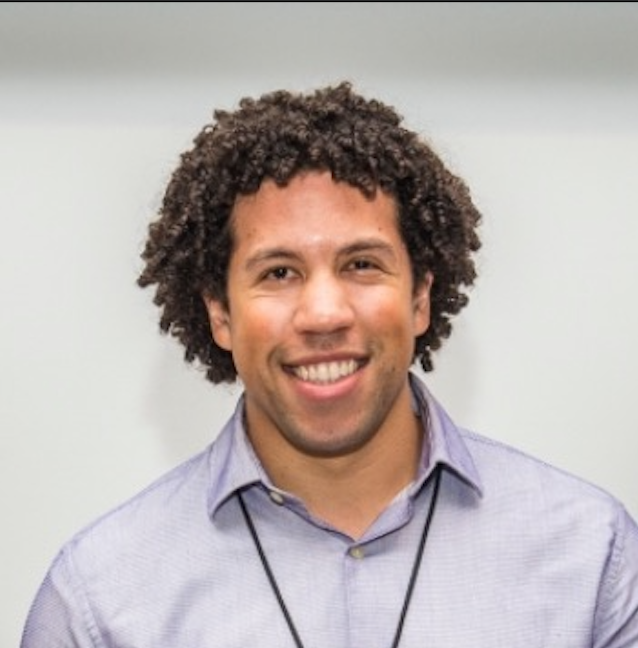
We asked Max to reflect upon his experiences with CRS and as a graduate student, what he has been up to nowadays, and what the future holds for him:
- What initially inspired you to apply to medical school?
I’ve always had a curiosity in the natural world around me. Interest in science and the humanities came naturally to me. However, I first became exposed to medicine and physicians due to cancer in my family. After seeing the impact that medicine can have on lives and families first-hand, I explored medicine as a vocation for myself personally.
- Why the interest in research broadly and, specifically, reproductive research?
Research was something I initially tried out when undecided about my career aspirations in college. Originally, I wasn’t sure if I would like it, but once engaged in the lab, I found it fascinating and exciting. To me, training to become a scientist was acquiring a skillset that enabled me to more directly engage the world around me, and independently chase my own curiosity. Due to my family’s history, I was very interested in health and patient-focused research when I began graduate school. Upon meeting Dr. Teresa Woodruff, my curiosity was immediately piqued, due to the innovative and rigorous way in which she defied the historical tropes and scientific conventions of her field, in lieu of establishing creative and collaborative teams, both in research and the clinic, to solve problems that truly mattered for patients, and were dually interesting to scientists. I followed up with her to explore a path in reproductive medicine research…6 years later…here I am!
- Could you tell us a bit about your research?
Title: Strategies to Model the Testis Ex Vivo and In Vitro
In my dissertation work, I investigated engineering methods to maintain and recapitulate testicular tissue within the laboratory. This is a young and exciting field, with goals to develop methods to in vitro derive gametes for use with clinical infertility patients, and to innovate functional testicular tissue models for use in pharmaceutical drug testing and development. Towards this vision, I used microfluidic culture platforms and static culture methods to explore ex vivo spermatogenesis and reproductive endocrine function in human and mouse testis explants. Most recently, I have explored multiple methods and fundamental paradigms within testicular organoid generation (engineered microtissues) and optimized a highly biomimetic and easily reproducible testicular organoid model. My dissertation concludes with an in-depth discussion of necessary next steps and future visions between the intersection of human reproduction and bioengineering.
- What did you enjoy most about working with the Woodruff Lab?
There are three themes that capture a large portion of why I have enjoyed working alongside Teresa the past several years. First is her, fearlessness. As stated above she never hesitates to engage interesting questions, even if they seem challenging or even sci-fi outlandish. Second is her creativity and ambition. As a creative thinker myself, I was always refreshed when working with Teresa and having her raise creative questions and solutions that I had not envisioned myself. Thirdly, Teresa is dedicated to continuing her own learning and growth as a professional and person. Enrolling as an MD/PhD student is a large commitment towards day-to-day and lifelong learning. One of the best lessons I have taken from working with Teresa is that no matter who you are, a high school student, a graduate student, or the dean of graduate school. Learning should always be at the top of your personal values and priorities. Independent and collaborative learning are ways of life for the Woodruff Lab.
- How did involvement with CRS play a role in your academic and professional development?
I have been involved as a teaching assistant for the laboratory coursework in the MS-RSM, I have presented several times at weekly Reproductive Research Updates (RRU), and I have also helped organize and run the first CRS Summit. All of these have been great opportunities for me to further develop my teaching, presenting, and administrative/leadership skills.
- As far as medical school is concerned, were there any courses, organizations, or events that you found the most formative towards your current research and goals?
The Feinberg School of medicine is a fantastic program, and has prepared me to confidently look ahead towards my future clinical activities. I cannot say a single thing about them that takes the cake, but overall it is an extremely welcoming community. Much kinder than some others I have experienced. The Medical Scientist Training Program (MD/PhD) in particular has provided a family I have relied upon here in Chicago, and has enabled me to form best friendships with my colleagues that I anticipate to become life-long. Pertaining to my career, the advising I have received from Dr. Robert Brannigan in the Urology department has been particularly insightful for visualizing future clinical and research directions related to my interests.
-
What is next for you academically and professionally?
Training to be a physician :-). I’m currently preparing to re-enter the clinic as a 3rd year medical student. I’m super excited to be back in the hospital, and to proceed through my required clerkships. My long-term vision is to pursue a career as an academic physician or surgeon and scientist.
8. What advice would you give to people who are thinking about med/grad school?
Meet medical students and graduate students and see if you can see yourself as a member of their cohort. Could you see yourself as a member of their “tribe?” Everyone can study science and medicine in the comfort of their own homes, especially with much of medicine education being distributed virtually these days. But entering this profession also requires an innate desire to help patients and discover new knowledge. And this can only be done (and moreover is best accomplished) by working alongside colleagues. Neither field (science or medicine) is a place for lone rangers anymore, but collaborative environments for engaged and enthusiastic team members who help one another and invest in their peers just as they would themselves.
9. How have you been spending your time during the COVID-19 pandemic?
Honestly, I’ve been working a LOT! Quarantine has been a super productive time for me academically. I finished my PhD Dissertation and successfully defended it via Zoom, which was an unexpected change of events, but one I am thankful my committee and I could make work. In addition, I’m re-warming my clinical knowledge with some medical textbooks and other resources. Outside of academics, I have taken up a new yoga practice, I cook quite frequently, and I have been reading several books for fun in the evenings. Reading is probably my most frequent pastime (Here is what I’m reading now…disclaimer, I always read multiple books at once: IQ84 by Haruki Murakami, Flow by Mihaly Csikszentmihalyi, At The Existentialist Café by Sarah Bakewell, The Sounds of Poetry by Robert Pinsky, Circe by Madeline Miller, Enquire Within by In-Q, and Monstress, a graphic novel by Marjorie Liu and Sana Takeda).