CRS Scientist Spotlight on Dr. Giulia Vigone
What I could appreciate since day 1 is the great collaborative environment and the enthusiasm of every member, from students to trainees and faculty.”
Giulia Vigone, PhD
Dr. Giulia Vigone, PhD recently joined the CRS team as a new Lecturer for the MS-RSM program and Director of Alumni Relations. Dr. Vigone joins us after her postdoctoral fellowship at The University of Connecticut Health Center studying ovarian biology, specifically mechanisms in meiotic resumption. Turning her focus to teaching, she will be leading core MS-RSM classes in Responsible Conduct of Research in Reproductive Science (REPR_SCI 425), Research Proposals (REPR_SCI 455), and Assessment and Career Planning (REPR_SCI 497) in the upcoming academic year.
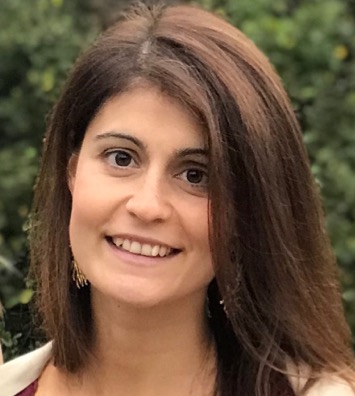
Name: Dr. Giulia Vigone, PhD
Position: MS-RSM Lecturer
What brought you to join the CRS community and what is your current position?
I have admired the work of CRS members since my early days in the lab as a Master of Science student at the University of Pavia (Italy). A few years later, even though I have moved away from the bench, joining the CRS gave me the opportunity to pursue my interest in Education and Career Development, while still being immersed in the field of research that I have always been very passionate about. At the CRS I am a Lecturer for the MS in Reproductive Science and Medicine Program.
Could you describe your research?
I have moved away from the bench, but I have always studied the female side of reproduction. My main research interests are the quality of the ovarian follicle and the signaling mechanisms by which Luteinizing Hormone regulates meiotic resumption and ovulation.
What aspect(s) of CRS do you find most valuable?
I have just started working in my position, amidst the COVID-19 pandemic, so I haven’t had a chance to get the full CRS experience yet. Although, what I could appreciate since day 1 is the great collaborative environment and the enthusiasm of every member, from students to trainees and faculty.
What has been the most valuable aspect to your training as a reproductive scientist?
Starting my scientific career in Europe and continuing it in the States has allowed me to get exposed to very different environments. This taught me think about each question, especially the ethical questions around reproductive science, from different angles and perspectives.
What would you recommend to junior scientists in order for them succeed in their scientific careers?
I have yet to hear someone say that their career path has been a straight line, so my suggestion is to keep an open mind and talk with as many people as possible along the way. I would also recommend to not skip any social event, be it at a conference or in school. The best ideas comes from relaxed minds. I have witnessed multiple successful collaborations taking shape in front of a drink!
What do you think will be the next big contribution in the reproductive biology field?
I think that many of the future contributions to reproductive biology will come from the fields of Tissue Bioengineering and Regenerative Medicine. The progresses made in the past few years towards the engineering of different reproductive organs/tissues are unbelievable.
What hobbies do you have outside of the lab?
In the pre-pandemic world I enjoyed travelling, especially to Europe, to spend time with my family and friends while exploring new places. Growing up near the Alps, my favorite things are: hiking, cheese and wine, and mountain views.