CRS Trainee Defends Dissertation and Prepare for Clinical Clerkships
The MD/PhD dual degree is long...but if you know that you want to practice medicine and do research, it's a great training path in that it offers you dedicated, protected time to hone your research skills. ”
Emma Gargus
As May begins, students around the world complete final exams, submit papers, prepare for graduation, and make difficult decisions about what is next. While much of life is on hold, students in programs such as the Medical Scientist Training Program, prepare for the next phase of their academic careers.
Please join the Center for Reproductive Science in congratulating MSTP student and CRS trainee Emma Gargus for successfully defending her doctoral dissertation.
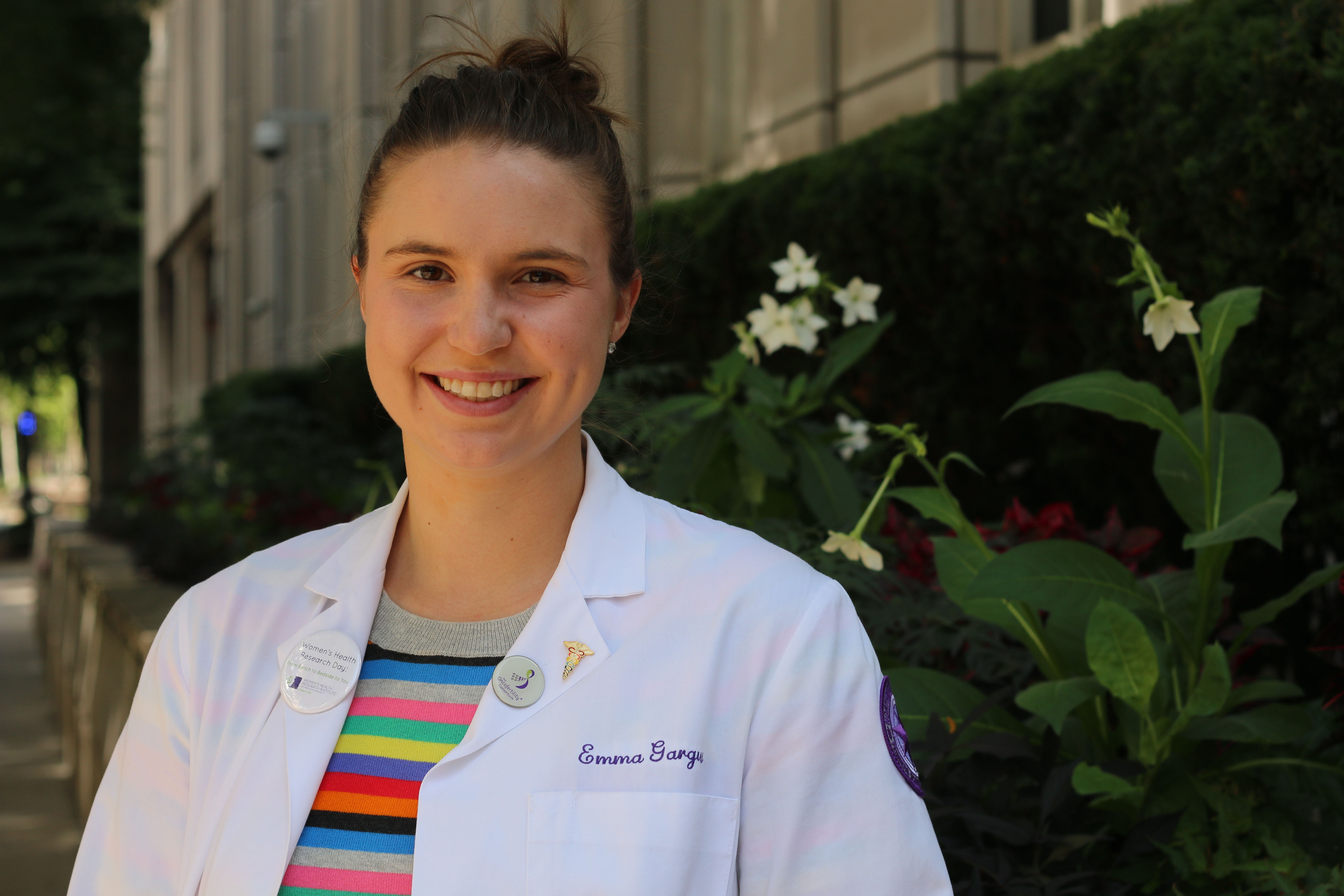
We asked Emma to reflect upon her experiences with CRS and as a graduate student, what she has been up to nowadays, and what the future holds for her:
- What initially inspired you to apply to medical school?
I had always been interested in math and science and solving puzzles and liked that medicine offered a way to apply that knowledge and interests to help others in a meaningful way. In high school and college, I did some shadowing and volunteering at local hospitals to get some exposure to the career path. My uncle is an MD/PhD so he modeled how someone could combine practicing medicine and doing research to have a varied and interesting career with the potential to make a big impact on the lives of individual patients and medicine as a whole through new discoveries.
- Why the interest in research broadly and, specifically, reproductive research?
In college, I majored in materials science and engineering and wasn't sure if I wanted to apply that knowledge to issues around the environment/energy (sustainable materials, recycling, efficient batteries, etc.) or to biomedical applications. I applied for several undergraduate research opportunities and ultimately chose a lab in the department of biological engineering, where I leveraged my materials science knowledge to engineer hydrogels scaffolds for women's health diagnostics (specifically, endometriosis) and a human-body-on-a-chip project. The lab I worked in in college actually collaborated with Teresa's lab and encouraged me to do a rotation in Teresa's lab once I got to Northwestern. Ultimately, after doing rotations in several other labs, I chose Teresa's lab and continued along a similar research path developing new biomaterials for ovarian tissue engineering.
- Could you tell us a bit about your research?
The title of my thesis is "Engineering complex, heterogeneous ovarian microenvironments." The Woodruff Lab has a long history of using biomaterials for follicle culture, but with current approaches, it can be challenging to support the in vitro survival and development of early stage ovarian follicles and we have never been able to achieve multiple ovulatory cycles. These are key functions of the physiologic ovary that were missing from our in vitro models. The idea behind my thesis work was to characterize the material properties (stiffness, porosity, etc.) of the physiologic ovary and develop biomaterials strategies (new materials, 3D bioprinting, etc.) to phenocopy those features in an engineered tissue mimic. We hypothesize that by providing biomimetic microenvironments tailored to specific follicle stages, we can support the survival of early stage follicles and establish inter-follicular hierarchies necessary to enable multiple ovulatory cycles in vitro.
- What did you enjoy most about working with the Woodruff Lab?
As a student in Teresa's lab, I had a lot of freedom and resources to explore ideas and passions. She really encouraged me to pursue collaborations with labs from various departments across the university and provided amazing opportunities to interact with important leaders in the field at conferences.
- How did involvement with CRS play a role in your academic and professional development?
RRU was a great way to stay up-to-date about the wide breadth of reproductive science research going on across the university, to chat with students from other labs, and to have a delicious lunch! Those interactions often sparked me to think about my project in a different way or try a new idea.
- As far as medical school is concerned, were there any courses, organizations, or events that you found the most formative towards your current research and goals?
In medical school I was involved in the leadership of Queers & Allies, the LGBT+ and allies student group on campus. We developed Feinberg's on-line and in-person LGBT+ Safe Space training module and have been active members of various task forces that seek to increase inclusion and reduce bias in the medical school curriculum. I'm excited to get involved in more medical education-based research projects when I return to medical school.
-
What is next for you academically and professionally?
I'm returning for the final two years of medical school, which are the clinical clerkships. As MSTP students, we do the first two years of medical school first, then the PhD, and then return for the final two years of medical school.
8. What advice would you give to people who are thinking about med/grad school?
For people trying to decide between med school vs. grad school vs. a dual degree program, do what you can to experience what those paths are like. This is a good idea because (1) all of these paths take a lot of time and effort and you want to make sure you really like what you'll end up doing and (2) a big part of what admissions committees look at is what efforts you've made to explore and understand the career. For medical school, they want to see that you have shadowed doctors and/or other allied health professionals and that you volunteered (both clinically-relevant volunteering and non-clinical volunteering, which demonstrates that you have altruism). For PhD, they want to see that you have had a significant research experience(s) and that you were productive/successful (papers, posters, talks, doing a (semi) independent project, etc). The MD/PhD dual degree is long (avg. time to degree for all US programs is ~8 years), but if you know that you want to practice medicine and do research, it's a great training path in that it offers you dedicated, protected time to hone your research skills. MDs can do research, but they need to carve out the time to learn how to be a good scientist. There's also other types of MD dual degree programs including MD/MBA, MD/MPH, and MD/MA (bioethics/medical humanities here at NU), depending on what your interests are. I also recommend seeking out people who have done these programs -- anyone from current students to established faculty to get a sense of what the training is like and what kinds of career paths are open to you down the line with these various degrees.
9. What are your future career plans?
After medical school, I'll do a residency. At the moment, I'm planning to do a residency in OB/GYN and fellowship in REI, because that's a great match for my research interests, but I'm keeping an open mind to all specialties as I begin my clinical clerkships. Ultimately, I hope to both see patients and have a lab where I can use my engineering background to tackle biomedical questions.
10. How have you been spending your time during the COVID-19 pandemic?
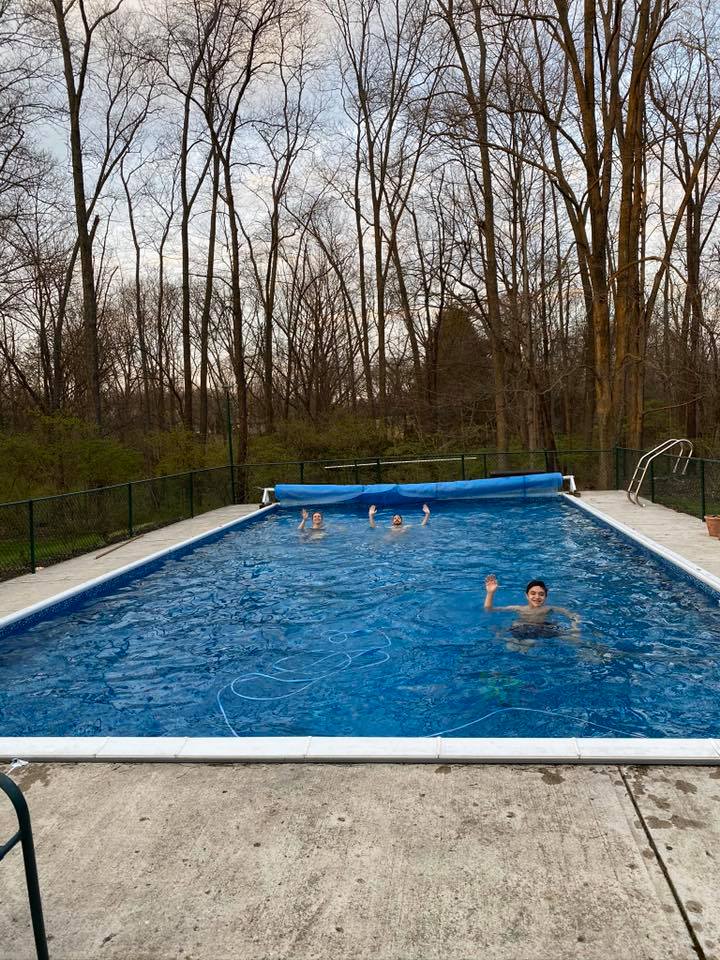
I've been weathering out the pandemic at my mom's house in Ohio, which has a hot tub, swimming pool (heated to 89°F), and badminton and ample space for some Auburn University-themed beer pong for Hunter's 30th birthday. I'm also spending a lot of time on Zoom -- everything from catching up with old friends, watching medical school lectures, and defending my thesis.