CRS Scientist Spotlight on Zainab Taghvaei
This program has helped me to become a better future scientist and improve my knowledge about the reproductive science. Especially, the chance of meeting people from various fields and understanding different career opportunities has been fulfilling.”
Zainab Taghvaei
Zainab Taghvaei is an MS-RSM graduate student in Dr. Margrit Urbanek's lab. Her research focus is on understanding impact of rare AMH variants in PCOS women. As she enters into her second year of her thesis studies, she reflects on the field of reproductive science and how CRS and the MS-RSM has impacted her growth as a reproductive scientist.
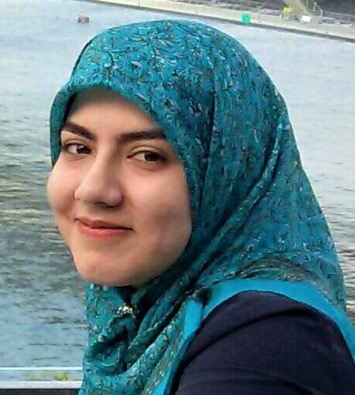
Name: Zainab Taghvaei
Position: MS-RSM Graduate Student
Mentor: Dr. Margrit Urbanek, PhD
Thesis: Impact of Rare AMH Variants in PCOS Women
What brought you to join the CRS community and what is your current position?
I majored in Biology at the University of Oklahoma. When I graduated, I was looking for a graduate program that focuses on medical subjects like cardiovascular research or reproductive science. Looking through different medical schools that offer such programs, I came across the MS in Reproductive Science and Medicine Program on the website of Feinberg School of Medicine at Northwestern University. In addition to my personal interest, the CRS program had a lot to offer and improve my knowledge as a growing scientist. Currently, I am a 2nd year MS-RSM graduate student and working on my thesis in the lab of Dr. Margrit Urbanek, PhD at the Division of Endocrinology, Metabolism and Molecular Medicine.
Could you describe your research?
My thesis project is titled as “Impact of Rare AMH Variants in PCOS Women”. My mentor for this research is Margrit Urbanek. The focus of our lab is to understand the genetics of complex diseases like Polycystic Ovarian Syndrome (PCOS) the most common form of infertility of reproductive age women. My research will follow up on the findings of a previous PhD student in the lab who identified a series of loss of function mutations in the Anti Muellerian hormone (AMH) gene in women with PCOS. For my research project, I will investigate the mechanism for this loss of function in 17 mutations mapping the coding region of AMH that are either missense mutations (change an amino acid) or are predicted to generate an abnormal RNA transcript. Since we have seen in previous studies that the AMH signaling has been reduced in these AMH variants we propose that the observed loss of signaling potential in these rare AMH mutations could be due to impaired translation of the protein, improper processing of the gene product, or, defective secretion of the hormone complex. I will test the impact of AMH mutations on protein stability, hormone processing, and hormone secretion in COS-7 cells using Western Blot analysis.
What aspect(s) of CRS do you find most valuable?
Overall, I have enjoyed the CRS events throughout the past year. This program has helped me to become a better future scientist and improve my knowledge about the reproductive science. Especially, the chance of meeting people from various fields and understanding different career opportunities has been fulfilling.
What has been the most valuable aspect to your training as a reproductive scientist?
I can say the most useful aspect to my training has been the Career Catalysts and the Assessment and Career Planning course. These two have helped me to better understand where I can use my knowledge in a long time, recognize multiple careers within the reproductive field, and, how you can implement your knowledge of reproductive science within different areas of medicine/ or life science.
What is one piece of advice you would give to young scientists starting in their journey in science?
A piece of advice I have is that collaboration and consulting with people helps a lot, even if they are within different areas of science or other subjects. Collaborating helps you have an open way of thinking and lead you to a more thoughtful decision to solve a problem. Additionally, we can learn from each other’s experience, either good or bad.
What do you think will be the next big contribution in the reproductive biology field?
I think that future contributions to reproductive biology will be about In Vitro Fertilization (IVF) and Assisted Reproductive Technologies (ART). The findings from these areas have been developing rapidly throughout the past years.
What hobbies do you have outside of the lab?
One of my hobbies that I enjoy is watching travel documentaries from around the world or reading about their cultures and histories. In addition, documentaries on National Geographic about the mysterious behaviors of animals and different natural environments are entertaining.