CRS Scientist Spotlight on Dr. Maxwell Edmonds
You cannot control how the data will reveal itself, nor how it will evolve your scientific story. But relationships we do have some control over. The people next to you at the bench, in the office, joining you at conferences, and yes, over zoom…are more important than 99.9% of the experiments you will do in a given year. ”
Dr. Maxwell Edmonds
Dr. Maxwell (Max) Edmonds, PhD is recent PhD graduate and 3rd year medical student with the Medical Scientist Training Program (MSTP) in The Feinberg School of Medicine who completed his PhD studies with Dr. Teresa Woodruff. Max was recently inducted into the Edward A. Bouchet Graduate Honor Society "recognizing outstanding scholarly achievement and promote diversity and excellence in doctoral education and the professoriate." His research focused on developing engineering methods to maintain and recapitulate testicular tissue within the laboratory.
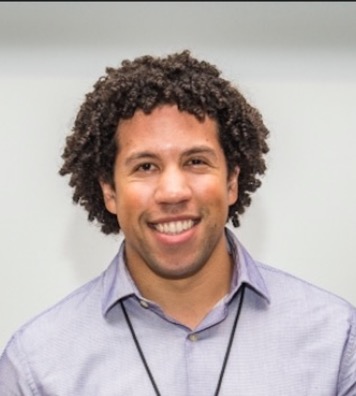
Name: Dr. Maxwell Edmonds, PhD
Position: MSTP Student completing medical studies
Mentor: Dr. Teresa K. Woodruff, PhD
Thesis: Strategies to Model the Testis Ex Vivo and In Vitro
What is your connection to the CRS community and what is your current position?
I am a MD/PhD student. I recently completed my PhD under the advising of Dr. Teresa K. Woodruff PhD. I am now in my third year of medical school, working to complete my MD studies.
Could you describe your current research?
In my dissertation work, I investigated engineering methods to maintain and recapitulate testicular tissue within the laboratory. This is a young and exciting field, which could help develop methods to derive gametes for use with clinical infertility patients, and to innovate functional testicular tissue models for use in pharmaceutical drug testing and developmental biology research.
Towards this vision, I used microfluidic culture platforms and static culture methods to explore ex vivo spermatogenesis and reproductive endocrine function in human and mouse testis explants. More recently, I explored multiple methods and fundamental paradigms within testicular organoid generation (engineered microtissues) and optimized a highly biomimetic and easily reproducible mouse testicular organoid model. My dissertation concludes with an in-depth discussion of necessary next steps and future visions between the intersection of human reproduction and bioengineering.
What aspect(s) of CRS did you find most valuable?
I found the sense of community and easy accessibility to world-class mentors, to be two of the most valuable aspects of the CRS during my training at Northwestern. Through the center I fostered a mentorship team with multiple faculty who each helped guide my growth as a scientist, as well as consulted the technical developments of my work. Northwestern has an extremely rich history in the reproductive sciences, and CRS provides a framework for students to effectively leverage many resources to their benefit across multiple stages of training and development.
What has been the most valuable aspect to your training as a reproductive scientist in CRS?
I have felt incredibly supported by my adviser and committee throughout my doctoral training. Dr. Woodruff and I embarked on a new and risky project for my dissertation, in large part the success of our work is due to the multi-faceted guidance we received from many members of the CRS community. Beyond this, CRS gave me many opportunities to practice my presentation and science communication skills across each year in graduate school. The skill set I have sharpened through these opportunities has been invaluable.
What would you recommend to junior scientists in order for them succeed in their scientific careers?
I could give a lecture on this topic. But I think I can distill the most important aspects down to a few tenants: First, choose scientific questions that genuinely interest you. No matter how silly they might seem to someone else. No matter if it’s in a “hot area” this year at the NIH. As long as you have a natural source of growing curiosity in the area, that is key. Ultimately, no one in the world will have the same level of expertise in your chosen area as you do. Don’t worry if your audience and readership have little prior knowledge or interest in your area. Enthusiasm is infectious. No matter how interesting or mundane a subject…If you can draft a powerful curiosity and story, it will be easy for others to adopt your outlook. Then practice communicating that story to everyone! At the end of the day, all scientists are in an intellectual romance with their field of study. Draw joy from it.
Second, value relationships over data. The ‘science is, and was, the science’ before we ever developed a question or hypothesis about it. You cannot control how the data will reveal itself, nor how it will evolve your scientific story. But relationships we do have some control over. The people next to you at the bench, in the office, joining you at conferences, and yes, over zoom…are more important than 99.9% of the experiments you will do in a given year. In fact, most science is learned by the greater minority of questions and experiments…your peers will help you identify these scientific pearls (which are often in your blind-spots due to over-familiarity with your own data!). I think many young scientists feel pressured to pour everything into their work, even at the cost of their own health and connection with others. While this can work to meet an upcoming deadline, cram for a meeting over a weekend, or even to wrap up a manuscript across a semester, I’ve found it is a poor long-term plan. Little science can be done alone anymore, and anyways it’s always more fun with others :).
Third, learn to love the pain in the process. For some people this is grinding at the bench in the lab 5-7 days a week, doing an experiment ten times before you begin to judge the results, or reading their first 100 papers before developing a solid project plan. For others, the pain in the process is time and energy-management. Being a scientist is often a busy life; it is a skill to learn to be comfortable knowing that there will ALWAYS be more you can and could do at the end of the day. Savor the rewards and joys tucked between the ever-growing list of tasks! Learn to decide where the “bookmarks” are in your own story and work-process. Sustainability matters. And for many individuals, the pain in the process is self-criticism. In the academy, you are surrounded by peers who are just as intelligent and high-performing as you are. However, this is a great thing! Who better to rub shoulders with on a daily basis? Harness it as an advantage, and become comfortable being the least knowledgeable person in the room.
Use all of these discomforts to whittle down your ego, nurture your taste for challenges and cultivate your passion for growth through hard work and even-keeled introspection. Ultimately, there are thousands, millions of ways to lead a happy and productive life. Stay away from the things you don’t enjoy, and what you’re left with are a myriad of activities that can give you energy and make you smile each day.
What do you think will be the next big contribution in the reproductive biology field?
I think a few topics are at the cusp of revolutionizing humanity and biology. As we gain an increasing number of powerful tools for genetic and reproductive engineering, we are very close to achieving considerable power over human life and reproduction that was only ever dreamed of by science-fiction novelists before our time (cue: GATTACA, DUNE, and other titles...). CRISPR genome editing; gamete genetic prediction, selection and engineering; and improved life-support for early fetuses and fertility-support for individuals outside of the historical timeframes for ‘fertility,’ bring up a slew of never-before-considered ethical challenges. If we can select embryos with specific traits, who gets to do this? Everyone? Only those who can pay? Do we only select against disease? Or do we also select for enhancements? When is a technology ‘safe’ to use? With increasing ability to save preterm fetuses…when does viable life begin? How do reproductive rights and justice interplay into these developments? These ethical dilemmas, and likely many others, will need public forums for debate, and eventually, commonly held scientific and society agreed upon codes of conduct. (On a basic science note…Beyond fertility technologies, I have a hunch that reproductive immunology holds many interesting stories yet to share with us.)
Do you have any notable stories from your time in CRS?
A couple of my favorite memories from CRS include learning about Neena B. Schwartz PhD, and appreciating the ‘family tree’ of reproductive scientists I belong to, and how this family has grown at Northwestern over the past decades. Similarly, I’ve remember great moments at Frontiers in Reproduction, at the Endocrine Society meetings, and the Oncofertility Consortium meetings, where I have met current and past trainees of the CRS; each of whom have welcomed me as a valuable member of the same scientific family, which now stretches across the entire globe. On a personal note, hearing Dr. Woodruff comment on how she “never expected the testis to be more challenging to engineer than the ovary,” brings out a wry smile and a laugh.