CRS Scientist Spotlight on Dr. Wenan Qiang
The CRS community has a well-established culture of developing young scientists, both personally and professionally, toward creative and rewarding scientific collaborations within the community and across other functions. ”
Dr. Wenan Qiang, Research Professor
Dr. Wenan Qiang is a long time member of the CRS and is constantly collaborating with faculty and trainees in our center. He is a Research Professor of Center for Developmental Therapeutics, Ob/Gyn, and Pathology and his work is focused on developing clinically relevant and molecularly profiled patient-derived xenograft (PDX) tumor models, identifying cancer cell markers and understanding cancer cell behavior.
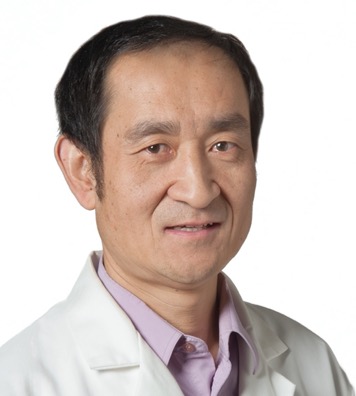
Name: Dr. Wenan Qiang, MD, PhD
Position: Research Professor for Center for Developmental Therapeutics, Ob/Gyn, Pathology
What brought you to join the CRS community and what is your current position?
In 2009, I joined the Department of Obstetrics and Gynecology, where I now hold an appointment as Research Professor, and became actively involved within the research conducted at the Center for Reproductive Science. At the time, I was investigating the mRNA binding protein PUM1 and its activity in regulating spermatogenesis and fertility. My interest in the reproductive sciences began early in my career when I studied the neurogenerative mechanisms of the rare childhood disease Ataxia-telangiectasia (AT) at the University of Texas MD Anderson Cancer Center. The son of a friend of mine, unfortunately, was diagnosed with the disease and my research took on a personal dimension. Through my research, I found that AT was not only associated with neurodegeneration, but also with an increased risk of developing various types of cancer and with incomplete sexual development. These broad themes have since guided my research since.
Could you describe your research?
My research within the CRS community has largely focused on uterine fibroid, ovarian, and breast cancer. The majority of my recent published works have centered on the development and application of new mouse models to study the pathogenesis of uterine fibroid formation and growth and the effects of ovarian tumor growth inhibitors. These research hope to identify new strategies and avenues for pre-clinical research translation toward personalized medical procedures.
What aspect(s) of CRS do you find most valuable?
I really admire the long-standing tradition of mentorship that the CRS community has sustained since the Center’s founding. The CRS community has a well-established culture of developing young scientists, both personally and professionally, toward creative and rewarding scientific collaborations within the community and across other functions.
What has been the most valuable aspect to your training as a reproductive scientist?
My early academic and professional training was not as a reproductive scientist; and the CRS community played an important role in helping me through a transition within my career from neuroscience to the reproductive sciences. What struck me as enriching were the weekly seminars that invited me, a then-junior research faculty, to learn from the wider community across a diverse range of topics, including on recently published papers, the “how-tos” for successful grant applications, and the “where-tos” for finding and utilizing the research tools and other resources available through the community.
What would you recommend to junior scientists in order for them to succeed in their scientific careers?
I believe the three keys to success are: find a research topic that interests you; find a mentor that supports you; and get involved in all of the CRS activities that allow for you to find both.
What do you think will be the next big contribution in the reproductive biology field?
The field of reproductive biology is undergoing some new and exciting developments. In the future, I foresee that 3D in silico microfluidic culture and whole-body imaging will be the next big contributions to field at-large. With these next developments, cell and tissue dynamics will become more precisely modeled, in real-time, at cheaper cost by mimicking the conditions of the more expensive animal models.
What hobbies do you have outside of the lab?
I like to go on weekend runs with my wife, and I enjoy gardening.