CRS Scientist Spotlight on Dr. Mazhar Adli
The difference between a great scientist and a mediocre scientist is not the IQ level but the amount of effort that they put in their research.”
Dr. Mazhar Adli, PhD
Dr. Mazhar Adli is a Associate Professor of Ob/Gyn who's work is focused on understanding the mechanisms involved in cancer progression and how that knowledge will contribute to the development of new therapeutics to cure cancer. Dr. Adli, a recent addition to the Department of Ob/Gyn, brings new strengths and new insights in the field of cancer biology to our community. We are delighted to have him present his work at our CRS New Years Lecture on January 15th at 12pm (Zoom).
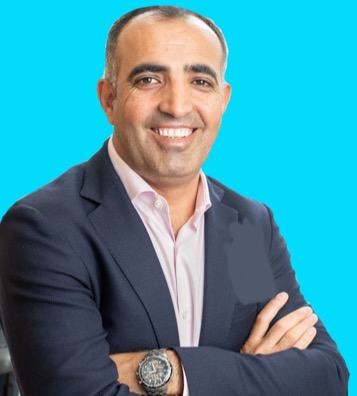
I am Associate Professor in at the Department of Obstetrics and Gynecology and Robert Lurie Comprehensive Cancer Center at Feinberg School of Medicine of Northwestern University,
Could you describe your research?Our goals is to understand key drivers of cancer progression and identify novel therapeutic drug combinations to target them and cure cancer. To achieve this, we develop and use genomic and epigenomic mapping, editing and imaging approaches to understand genome regulation in normal and malignant settings. We integrate experimental tools with large-scale computational data analysis approaches to test our hypothesis and verify our findings.
We utilize and develop cutting-edge functional genomics strategies, including CRISPR based manipulation tools, to understand dynamic gene regulation and 3D genome organization in normal and cancer settings. These efforts are built on our previous expertise in genome-wide approaches and development of novel technologies for cancer research. Our lab has developed particular expertise in utilizing and developing CRISPR technologies. We are using these approaches for targeted and genome-wide CRISPR screenings to identify critical drivers of and combinatorial drug-targets for cancer.
What aspect(s) of CRS do you find most valuable or look forward to engaging in?Understanding genome regulation in normal settings shed important lights on how it may be aberrantly regulated in disease settings. We are interested particularly how aberrant genetic and epigenomic features contribute the development and progression of abnormalities in the reproductive tissues. Specifically, we have projects that are focused on ovarian cancer chemoresistance, leiomyoma and endometriosis.
What has been the most valuable aspect to your training as a scientist?I think it has been the learning and training in the laboratories of my brilliant mentors. I obtain my PhD at The University of North Carolina at Chapel Hill under supervision of Prof. Albert Baldwin in 2007. I always thought I was very fortunate and lucky to have my major scientific training in the
Baldwin lab. This training allowed me to ask the right questions, focus my research efforts and bring a project to finish line. My research was focused on cancer signaling pathways, specifically the main kinases that drive constitutive NF-kappa B cell signaling in cancer. Towards the end of my PhD years, the genomics and epigenomics research was becoming ever more popular due to wide-spread applications of next-generation DNA sequencing technology. Therefore, I knew that I want to do genomic and epigenomic research. Among few postdoctoral offers, I decided to join the laboratory of Bradley Bernstein at Harvard Medical School, Massachusetts General hospital and Broad Institute of Harvard and MIT. My postdoctoral training has expanded my scientific horizons. It thought me to ask “big” questions about the uncharted scientific territories and not to be afraid to go after “big” experimental designs, technology development and the analysis of big data.
What would you recommend to junior scientists in order for them succeed in their scientific careers? I think choosing the right mentor is probably the biggest single factor that affects our scientific career. We are fortunate to be in a major research institute and surrounded by many world-class scientists. Apart from the mentor choice, I have two simple advice; read a lot and just do your experiments. Everyone around us, our peers have the minimum intellectual capacity to be a scientist. The difference between a great scientist and a mediocre scientist is not the IQ level but the amount of effort that they put in their research. So, don’t be afraid to learn that new technique and apply it in a high throughout experimental design so that you can acquire larger scale data and be more productive.
What do you think will be the next big contribution in your field?I think it will be genome manipulations for better understanding of the genome and its clinical applications. The CRISPR technology is already big but there are still challenges about the delivery, precision and effectiveness of the technology. We will probably witness the next big phase of applications of genome and chromatin engineering technologies in various clinical settings.
What hobbies do you have outside of the lab?
I am playing tennis and riding bike as my two physical exercises. Other than that, I enjoy learning new languages and reading about philosophy and world history.