CRS Scientist Spotlight on Dr. Hong Zhao
CRS sets up a platform to bring together many scientists from different universities and institutions to sharing novel scientific thoughts and the state-of-arts technology, leading to productive cooperation.”
Dr. Hong Zhao
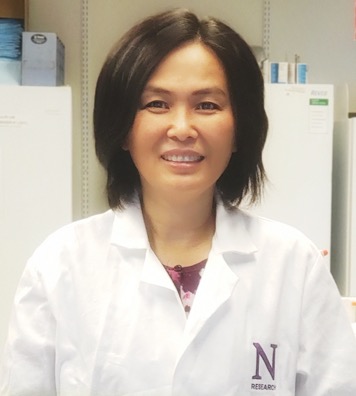
Dr. Hong Zhao, MD PhD is a Research Associate Professor of Ob/Gyn working with Dr. Serdar Bulun and her work is focused on understanding the effects of estrogen on disease development in the muscle and brain and in sexuality. Dr. Hong's research and her mentoring of trainees highlights her dedication to cutting edge science and the importance of mentorship to the next generations of scientists.
What brought you to join the CRS community and what is your current position?
I received my MD in China and my PhD in molecular endocrinology at the Nanjing Medical University in China and the Utrecht University in the Netherlands. After completing my postdoctoral training in the NIH, I Joined Dr. Serdar Bulun’s laboratory as a research faculty to study the role of aromatase and estrogen in breast cancer formation. Currently, I am a research associated professor in the Division of Reproductive Science in Medicine of OB/GYN Department at Northwestern University.
Could you describe your research?
My research focuses on defining how aromatase and estrogen contribute to the pathophysiology and human diseases including abdominal muscle fibrosis and hernia formation and sexual behavior and fertility in man as well as the pelvic floor muscle weakness and disorders and memory loss and Alzheimer’s diseases in the elderly women.
What aspect(s) of CRS do you find most valuable?
CRS sets up a platform to bring together many scientists from different universities and institutions to sharing novel scientific thoughts and the state-of-arts technology, leading to productive cooperation. Postdoctoral fellows, clinical fellows, PhD students, and even undergraduate and high school students receive high-quality training in such a diverse environment, which nurtures the next generation of reproductive scientists.
What has been the most valuable aspect to your training as a reproductive scientist?
The great mentorship, support, and encouragement I received from Dr. Serdar Bulun and many other CRS members are the most valuable aspect to my training as a reproductive scientist.
What would you recommend to junior scientists in order for them succeed in their scientific careers?
Stay focus on what you are studying. Hard work and teamwork will bring you to your destiny.
What do you think will be the next big contribution in the reproductive biology field?
The study of the impact of sexuality on infertility could be the next big contribution.
What hobbies do you have outside of the lab?Gardening exposes me to the outdoor fresh air, sun, flowers, and greenery and energizes me for the indoor lab and computer works.