CRS Scientist Spotlight on Dr. Erv Goldberg
The people are, in my opinion, are the most valuable aspect of CRS. CRS provides a venue in which members of this “split” campus can interact through the special lectures, symposia and weekly research reports. CRS brings together faculty and students with an interest in reproduction who might otherwise not ever meet.”
Dr. Erv Goldberg
Dr. Erwin (Erv) Goldberg, PhD is a pioneering member of Northwestern's CRS, a constant presence at many CRS events, and his named Lectureship brings luminaries who's work focuses on male reproductive science. Currently an Emeritus Professor in the Department of Molecular Biosciences, Erv's participation at CRS's events invigorates our trainees and faculty and his contributions to our understanding of sperm metabolism has pushed the field of reproductive science to greater heights.
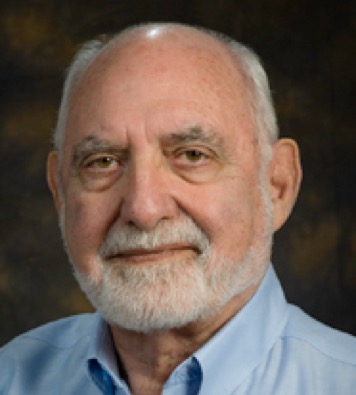
Name: Dr. Erv Goldberg, PhD
Position: Emeritus Professor in Molecular Biosciences
What brought you to join the CRS community and what is your current position?
I guess I would be considered a Charter member of CRS. CRS evolved from an NIH training grant (TG) in Reproductive Physiology awarded to Neena in about 1972. This was after Biological Sciences was split into three departments: Neurobiology Physiology (NBP) with Neena as Chair; Biochemistry Molecular Biology Cell Biology (BMBCB); and Ecology Evolution. Although I claimed I was a “biochemist” Neena asked me to stay with NBP and claimed I was a “physiologist”. I was the only “senior” member of her new department and agreed, but insisted I retain my title as Professor of Biological Sciences (which didn’t really mean anything). Anyway, one requirement of the TG was that the trainees do something “independent” beyond their research. I suggested they organize and present a “mini-symposium”. Neena took this to the next step arranging the “Mini-Symposium in Reproductive Sciences”, which if my memory is correct was the fore-runner of CRS. The rest is history.
Could you describe your research?
My research is and has been on sperm metabolism. I was co-discoverer of the sperm specific form of lactate dehydrogenase (LDHC), an important enzyme of glycolysis which is the primary metabolic pathway for energy production in these specialized cells. From the standpoint of reproduction, I proposed that LDHC could be targeted in a male contraceptive technology. At the present time (since my lab is now closed and I am Professor Emeritus) I am collaborating with Marty Matzuk at Baylor Medical School on this project funded by the Gates Foundation. The special issue of Biology of Reproduction on Contraception features a Review that I co-authored with Dan Johnston, Chief of the Contraceptive Branch, NICHD on contraceptive development.
What aspect(s) of CRS do you find most valuable?
The people are, in my opinion, are the most valuable aspect of CRS. CRS provides a venue in which members of this “split” campus can interact through the special lectures, symposia and weekly research reports. CRS brings together faculty and students with an interest in reproduction who might otherwise not ever meet. CRS adds a level of collegiality that we tend to ignore or miss because we as scientists often keep ourselves sequestered with our own research group in our laboratory.
What has been the most valuable aspect to your training as a reproductive scientist?
Actually, I my training was not as a “reproductive scientist”. My graduate work was on parasitic nematodes and had to do with metabolism, which was the “big thing” in biochemistry at the time.
What would you recommend to junior scientists in order for them succeed in their scientific careers?
My recommendation to Junior Scientists is that to succeed you have to “love what you do”. You have to recognize that not all experiments work and not be frustrated if a particular design needs to be modified. It is important to contribute to science by accepting review requests for papers, submitting grants and if necessary revising and resubmitting until its “right”. In addition, if you are not excited about a “positive” result from an experiment you are probably in the wrong job.
What do you think will be the next big contribution in the reproductive biology field?
I’m not good at predicting but certainly the area of “Oncofertility” can have a large impact.
What hobbies do you have outside of the lab?
I enjoy traveling and have had many opportunities while attending symposia and workshops worldwide to add a day or two of personal time to the trip. I’m fortunate that my wife is a wonderful companion to share my professional and personal life. We do things like attend Northwestern football and basketball games together. I enjoy family and have attained the status of “great grandfather”. And although not a “hobby”, I don’t mind reviewing manuscripts and grant proposals. Actually, I guess that means Science is both a vocation and a “hobby”. Love it!