CRS Scientist Spotlight on Ariel Dotts
Think critically but don’t be afraid to ask questions. As a scientist you should always be asking questions and thinking of questions, not just about others data but your own.”
Ariel Dotts
Ariel is a 5th year Driskill Graduate Program in Life Sciences (DGP) graduate student in Dr. Serdar Bulun's lab and is a recent inductee in the Edward A. Bouchet Graduate Honor Society "recognizing outstanding scholarly achievement and promote diversity and excellence in doctoral education and the professoriate." Her research focus is on understanding the "Genome-wide Changes in Myometrial Contraction and Labor".
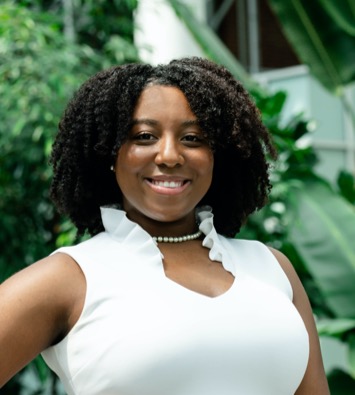
Name: Ariel Dotts
Position: DGP PhD Student
Mentor: Dr. Serdar Bulun, MD
Thesis: Genome-wide Changes in Myometrial Contraction and Labor
What brought you to join the CRS community and what is your current position?
I am a 5th year PhD candidate in the Bulun lab. I have always had an interest in reproductive health, so I knew that the lab was a perfect fit for me and I immediately was brought into CRS through my lab.
Could you describe your research?
Preterm birth is the leading cause of infant morbidity worldwide. Children born prematurely can experience developmental delays that cause lifelong issues. For most of pregnancy the myometrium, a portion of the uterus, remains relaxed until labor is initiated through some unknown mechanism. Once labor begins, the myometrium starts contracting to help in pushing the baby from the uterus into the world. Induction of labor is thought to be brought upon by inflammatory mediators, however a clear understanding of initiators for labor is lacking. Thus, my research focuses on understanding the mechanism by which the myometrium transforms from a relaxed smooth muscle to an active smooth muscle. The main goal of our research is illuminating this mechanism/understanding to help develop better therapeutics for treating preterm birth in the future.
What aspect(s) of CRS do you find most valuable?
The career catalyst series is most valuable to me in my current position as a graduate student.
What has been the most valuable aspect to your training as a reproductive scientist?
The most valuable aspect in my training has been the ability to attend scientific meetings. During my first year in the Bulun lab I was given the opportunity to attend the Society of Reproductive Investigation conference. This opened my eyes to the field of preterm labor, because I had no previous knowledge of this field before starting my project. And over the years attending meetings has tremendously helped me in not only learning but also teaching others with my own results.
What is one piece of advice you would give to young scientists starting in their journey in science?
Think critically but don’t be afraid to ask questions. As a scientist you should always be asking questions and thinking of questions, not just about others data but your own.
What do you think will be the next big contribution in the reproductive biology field?
Currently in the field of reproductive biology there is a lot of information and research about in vitro fertilization and its technologies. I think that will continue.
What hobbies do you have outside of the lab?
I’m currently learning how to play guitar and when I’m not reading papers, you can find me reading a good mystery novel!