Alumni Spotlight on Dr. Zhuan Zhao
These research updates broaden my horizons and promoted my research. Especially, the advance 3D printed ovaries model and the zinc signal nodes studies excited me.”
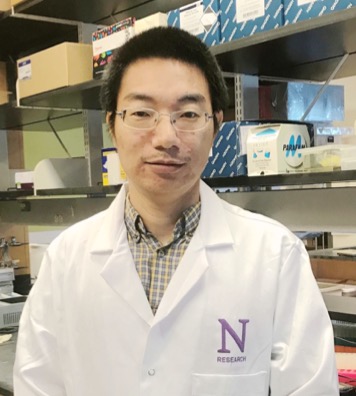
Dr. Zhuan Zhao
Dr. Zhuan Zhao is a CRS Alum and former postdoctoral fellow of Dr. Yong Wan, PhD Professor of Ob/Gyn and Pharmacology. Dr. Zhao's postdoctoral work focused on understanding posttranslational modifications in tumorogenesis and he continues to pursue these questions as an Assistant Professor at UT Southwestern Medical Center in Dallas, Texas.
What is your connection to the CRS community (mentor and position) and what is your current position is?
Mentor: Dr. Yong Wan, PhD
Position: Research Assistant Professor
Current position is Assistant Professor in UT Southwestern Medical Center.
Could you describe your current research?
In Dr. Yong Wan’s lab, I focused my research on the posttranslational modification regulation in genome stability, carcinogenesis and tumor immune response.
For genome stability, I recent characterized that PARP1-mediated KLF4 ADP-ribosylation plays in the recruitment of KLF4 to chromatin that is a critical step in ensuring KLF4-governed transcriptional function. KLF4 PARylation is required for KLF4-mediated DNA damage response, while KLF4-involved regulation of BRCA1-homologous recombination (HR) is independent of PARylation. Combination of KLF4 inactivation and PARP1 blockade leads to a synergistic killing of BRCA1-proficient triple negative breast tumor.
For carcinogenesis, I unbiased screening deubiquitinases in the models of tumor initiation and invasion and identified the USP11 stabilizes XIAP in promoting tumor initiation and EIF3H deubiquitinates YAP1 to enhance tumor invasion and metastasis.
For tumor immune response, the poor clinical response by immune-cold tumors is a current challenge. Xinxin Song and I reported that the immune checkpoint molecule B7-H4, which is prevalent among immune-cold triple negative breast cancers, is tightly controlled by oligosaccharyltransferase complex mediated glycosylation and AMFR derived ubiquitination. Inhibition of B7-H4 glycosylation causing its ubiquitination and subsequent degradation, improves the immunogenic properties of cancer cells.
In UT Southwestern Medical Center, I will continue my studies of posttranslational modification regulation in cell death and immunity.
What aspect(s) of CRS did you find most valuable?
The CRS is a family that tightly keep the scientists of reproductive science and medicine community together to share their valuable research progression in reproductive studies. The members can explore reproductive science from various aspects, including non-traditional and unconventional ways. The CRS bridge the interdisciplinary cooperation of members to boost reproductive studies.
What has been the most valuable aspect to your training as a reproductive scientist in CRS?
The CRS members have tons of research areas, such as use C. elegans, drosophila, mouse, organoid, 3D print model and clinic trials to study various aspect of reproductive systems. These research updates broaden my horizons and promoted my research. Especially, the advance 3D printed ovaries model and the zinc signal nodes studies excited me.
What would you recommend to junior scientists in order for them succeed in their scientific careers?
I think at first is following the frontier studies, which led us to know where the progression of our studies is and give us more enthusiasm. Second, join the CRS, which bridge the interdisciplinary cooperation in research methods and models.
What do you think will be the next big contribution in the reproductive biology field?
In my opinion, the potential big contribution including:
1) 3D printing artificial organ. Advanced 3D printing technology can be used to produce artificial ovaries, uterus, etc., and may be implanted or integrated into the human body. 3D printing models also make in vitro systemic reproduction biology possible.
2) Interdisciplinary. Other research areas, such as microbiome and cell death (Necroptosis, pyroptosis, and ferroptosis), will be integrated into the field of reproductive biology and plays a major contribution.
Do you have any notable stories from your time in CRS?
I remembered last year I have joined the reproductive research updates of Shimeng Liu, a graduate student in Dr. Bulun Lab. The topic is “Interplay between PR and DNA methylation during uterine leiomyoma stem cell differentiation”. In her speech, she showed us a lot of bioinformatics analysis which conducted herself. After her talk, we sought her help for bioinformatics analysis the landscape of BRCA1 gene mutation in breast cancer. She is very eager and efficient to help us complete the analysis