Alumni Spotlight on Dr. Shuo Xiao
I love the research environment at CRS. For example, the majority of CRS seminars and symposiums are reproductive biology and medicine related. I also enjoy the diverse focus of CRS, including both male and female reproduction, various reproductive organs, and also both basic research and clinical medicine. ”
Dr. Shuo Xiao
Dr. Shuo Xiao, PhD is a CRS Alum, former postdoctoral fellow of Dr. Teresa Woodruff the former Director of CRS and constant CRS collaborator. Shuo is now an Assistant Professor at Rutgers University in New Jersey where he is conducing research on environmental toxins and their effects on female reproduction and developing new screening methods to evaluate toxicity on ovarian follicles.
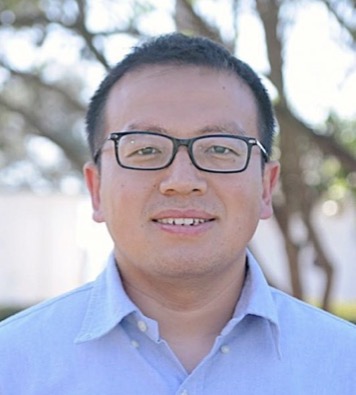
Name: Dr. Shuo Xiao, PhD
Postdoctoral Advisor: Dr. Teresa Woodruff, PhD
Current Position: Assistant Professor in the Department of Pharmacology and Toxicology at Rutgers University
What is your connection to the CRS community and what is your current position?
I did my postdoctoral research in Dr. Teresa Woodruff Lab from 2016 to 2019. I am now an Assistant Professor in the Department of Pharmacology and Toxicology at Rutgers University. I am also a faculty member in the Environmental and Occupational Health Sciences Institute (EOHSI) at Rutgers.
Could you describe your current research?
My lab focuses on: (1) the mechanisms by which environmental chemicals and clinical drugs impact female ovarian functions and fertility; (2) the development of a high-throughput in vitro ovarian toxicity screening platform using 3D in vitro ovarian follicle culture model and other cutting-edge technologies (e.g. microfluidics and vitrification), and (3) the use of 3D in vitro ovarian follicle culture model for new contraceptive discovery.
What aspect(s) of CRS did you find most valuable?
I love the research environment at CRS. For example, the majority of CRS seminars and symposiums are reproductive biology and medicine related. I also enjoy the diverse focus of CRS, including both male and female reproduction, various reproductive organs, and also both basic research and clinical medicine. The Oncofertility Consortium is also another aspect I really love. It connects reproductive biology to medicine and patients’ health, very translational and impactful! All of these aspects are greatly helpful for my research projects and career.
What has been the most valuable aspect to your training as a reproductive scientist in CRS?
The great mentorship and supports I received from Drs. Teresa Woodruff, Francesca Duncan, and Julie Kim and also other CRS members are the most valuable aspect to allow me to become a reproductive scientist.
What would you recommend to junior scientists in order for them succeed in their scientific careers?
I have three key words to share: be focused, be involved, and team science.
What do you think will be the next big contribution in the reproductive biology field?
The use of emerging and novel technologies in reproductive science.
Do you have any notable stories from your time in CRS?
By collaborating with other CRS members, I am greatly honored to be one of the inventors of EVATAR and female reproduction-on-a-chip, which is a milestone for us to use new methods to study reproductive biology and medicine. This is also one of my research interests after I have my own lab.