Alumni Spotlight on Dr. Sergio Cardona-Gonzalez
Collaborate and get involved as much as possible with different scientists or projects. These collaborations will not only serve as networking experiences, but it might create new ideas to advance your science further.”
Dr. Sergio Cardona-Gonzalez, MD
Dr. Sergio Cardona-Gonzalez, MD is a class of 2018 graduate of the MS-RSM program, CRS's first graduate class for the MS-RSM program. He conducted research with Dr. Pamela Monahan on imaging analysis of the preeclamptic placenta and identifying changes in regulators of angiogenesis. After completing his studies with the MS-RSM program Dr. Cardona-Gonzalez is focusing on entering into residency programs to further his medical studies.
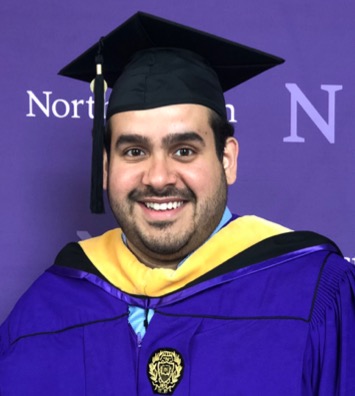
Name: Dr. Sergio Cardona-Gonzalez, MD
MS-RSM Class of 2018
MS-RSM Advisor: Dr. Pamela Monahan, PhD
Thesis Title: Characterizing Placental Dysfunction in Real Time Using Magnetic Resonance Imaging in a Rat Model of Preeclampsia
What is your connection to the CRS community (mentor and position) and what is your current position?
I am one of the first two non-thesis track students, part of the second cohort of the MS-RSM program. During my time at the MS-RSM program, I worked with Dr. Pamela Monahan, our mentor for the non-thesis project. As a foreign MD graduate, I’m working with my boards to enter residency in a reproductive medicine-related field.
Could you describe your current research?
Currently, I’m not a member of any lab or are participating in active research. After completing the MS-RSM program, I’ve been working on a personal-business project and focusing on getting ready to enter residency. In the near future, I would love to continue contributing to the research in the reproductive medicine field by focusing on finding new innovative treatment options that are affordable or ways to decrease cost for patients undergoing fertility treatment or preservation.
What aspect(s) of CRS did you find most valuable?
I think that the multidisciplinary network is one of the most valuable aspects of the CRS. There are so many research areas and labs working in various aspects of the reproductive sciences that make the perfect networking and knowledge-rich environment. Through the RRU, we learned and saw all this incredible research throughout multiple departments in NU. CRS interconnected research in so many areas like chemistry, biomedical, engineering, molecular bioscience, and medicine to provide the best environment to grow as a scientist.
What has been the most valuable aspect to your training as a reproductive scientist in CRS?
Although I was coming from a medical background, it was of a great surprise how the CRS could complement and further expand the knowledge gained in medical school about reproductive science and medicine. To fully see the integration between all multidisciplinary teams throughout Northwestern showed me how extensive is the reproductive science field. It is of great value to see how vast the field is because this opens doors for new ideas, collaboration, and advancements between scientists in multiple areas. Furthermore, the curriculum was so complete that we have all the tools to work in different environments and scenarios. We took classes that prepared us to work with research proposals, research regulations, research writing, research skills, and advancing our career as reproductive scientists.
What would you recommend to junior scientists in order for them succeed in their scientific careers?
Collaborate and get involved as much as possible with different scientists or projects. These collaborations will not only serve as networking experiences, but it might create new ideas to advance your science further.
What do you think will be the next big contribution in the reproductive biology field?
I think the reproductive biology field will continue to move forward, finding new innovative treatment options that will be more affordable for patients undergoing fertility treatment or preservation. Although it is changing drastically with new policy, access to these treatments is limited and not covered by many health insurances. Our work and new findings as reproductive scientists can ultimately help patients find ways to improve further and extend their reproductive lives.
Do you have any notable stories from your time in CRS?
During my time in the program, we had many great and memorable events: oncofertility meetings, research poster presentations, Reproductive Research Updates (RRU) with great lunch, CARA meetings, and great networking events. However, working on our non-thesis research project with Dr. Pamela Monahan and my research lab partner Sheila Egan was incredible. Although it added to my commute, I always looked forward to the trips we had to take to Evanston main campus to work on our project. In the NU main campus, we were able to work with Dr. Emily Waters in the CAMI facility and Dr. Jessica Hornick in the BIF facility. In these facilities, we were able to study using the MRI machine and microscopes the placentas of our rat model.