Alumni Spotlight on Dr. Dana Kimelman
When I came back to Uruguay the only thing I really knew was that I wanted to give something back to the CRS. I wanted to become a good scientist and make the enormous effort I did at Northwestern worth it.”
Dr. Dana Kimelman
Dr. Dana Kimelman, MD was a member of the first MS-RSM cohort in CRS who conducted research with Dr. Mary Ellen Pavone, MD. Joining our community from Uruguay, Dana conducted her thesis work on "Assessing the impact of delayed blastulation using time lapse morphokinetics and preimplantation genetic testing in an IVF patient population". Currently, she is supporting her own research questions in Oncofertility in ovarian tissue vitrification to preserve fertility in collaboration with institutions in Uruguay and with CRS partners at Northwestern.
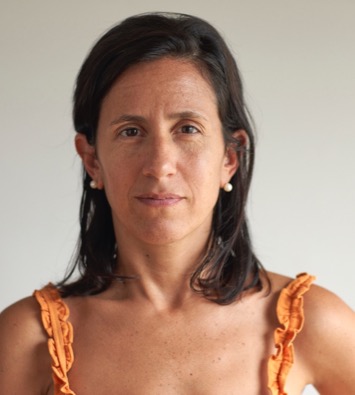
Name: Dr. Dana Kimelman, MD
MS-RSM Advisor: Dr. Mary Ellen Pavone, MD
Thesis Title: Assessing the impact of delayed blastulation using time lapse morphokinetics and preimplantation genetic testing in an IVF patient population
Current Position: Physician, Oncofertility research in alliance with Centro de Esterilidad Montevideo. (CEM) and the Medicine University (Facultad de Medicina, Universidad de la República Oriental del Uruguay).
What is your connection to the CRS community and what is your current position?
I think I will always stay connected to the CRS community. I work as an REI doctor specialized on Oncofertility and I am responsible of a scientific project in which we will standardize a ovarian tissue vitrification technique using a sheep model. We will be collaborating with Dr. Monica Laronda's Lab a member of the CRS at Northwestern. The final goal of this project is to start offering a fertility preservation option for pre-puberal girls in my country. With my amazing mentor Dr. Mary Ellen Pavone whom I am still connected with, we recently published a review related to my thesis publication. I try to be linked to the CRS community as often as I can.
Could you describe your current research?
We recently won an important Oncofertility grant on my country called: “ovarian tissue vitrification to preserve fertility”. This grant is financed by the national agency of investigation at my country. We will be working with the University of Medicine in Montevideo and a private IVF center called Centro de Esterilidad Montevideo. We will also collaborate with Dr. Laronda from the CRS at Northwestern University. The goal of this project is to standardize an ovarian vitrification technique using an animal model (sheep ovarian tissue) once we verify we can do it we will design a new project and an IRB to start doing it with human tissue.
What aspect(s) of CRS did you find most valuable?
Having an academic network of amazing scientists working in this field is awesome. Reproductive science is a field that has so much to be discovered. Everyone is so generous with knowledge and that´s what I find most valuable.
What has been the most valuable aspect to your training as a reproductive scientist in CRS?
I became a scientist thanks to the CRS and the MS-RSM program. I learned how to write a grant, how to write a paper, and how to do research. I am an MD specialized on Ob/Gyn and I had no background on basic research. Before starting the program I worked for one year on a basic science lab at Northwestern with Dr. Karen Ridge and that was very helpful, at least I knew how to grab a pipette… but I never did research on reproductive science. I feel I am such a better clinician thanks to everything I learned on basic science. Also working with Dr. Pavone and see how she does clinical and basic research showed me a different way of seeing how I want to design my professional life.
What would you recommend to junior scientists in order for them succeed in their scientific careers?
Try to find a place where you know you want to be in contact the people you admire, ask questions. Try to find a field that you want to develop. Don’t wait for others to come to you to tell you what you should do. Ask for help and work with a mentor that motivates you.
What do you think will be the next big contribution in the reproductive biology field?
I hope I will be able to contribute to the field on many ways. Hopefully we will be able to develop an animal model that will be useful also to other research groups working on this field and we will be able to collaborate with each other. I am especially interested in Oncofertility so I hope to continue contributing to this amazing field.
Do you have any notable stories from your time in CRS?
I am part of the first cohort of students of the MS-RSM program and that makes it very special. The most amazing thing that happened to me was my class, we were 7 absolutely different ladies looking for such different things. When we started I quickly realized I did not want to do a lab project for my thesis, I wanted to do clinical research and see patients with Dr. Pavone at the REI department. Finally I ended doing kind of both because I spent more than half of my research time on the IVF lab looking at the embryo development in the embryoscope. I am thankful for that. When I came back to Uruguay the only thing I really knew was that I wanted to give something back to the CRS. I want to became a good scientist and make the enormous effort I did at Northwestern worth it.