Alumni Spotlight on Anne Lenzo
Anne Lenzo, MS is a class of 2019 graduate of the MS-RSM program. She conducted research with Dr. Pamela Monahan, PhD on identifying angiogenesis factors that contribute to the development of a preeclamptic placenta in a rat model system. After completing her studies with the MS-RSM program Anne went on to work in an IVF laboratory and has moved on to working as an andrologist and endocrinologist.
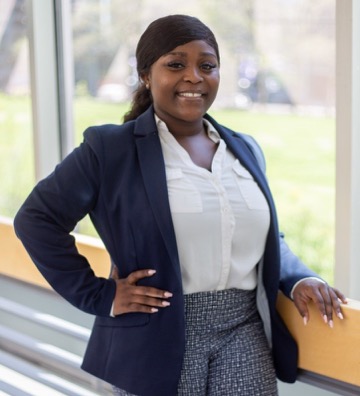
Name: Anne Lenzo, MS
MS-RSM Class of 2019
Thesis mentor: Dr. Pamela Monahan, PhD
Thesis title: Characterization of Vascular Defects in Placental Development in a Rat Model of Preeclampsia
What is your connection to the CRS community (mentor and position) and what is your current position?
I am a 2019 graduate of the MS-RSM program. I was on the non-thesis track and completed my research with Dr. Pamela Monahan on Preeclampsia, and I am now working in an IVF (In Vitro Fertilization) lab as an andrologist and lab assistant.
Could you describe your current research/studies?
After graduation, I began working in an IVF lab as a lab assistant. Recently, I started a new position at a new clinic as an andrologist and endocrinologist. While in this position, I was working alongside embryologists and an on-site urologist on male fertility, as well as processing blood hormone levels for all patients. I and am now training as a junior embryologist in the IVF lab where I will be more hands on in the lab to assist patients wishing to grow their family.
What aspect(s) of CRS did you find most valuable?
Everything that the program had to offer was extremely valuable. I loved meeting new people and learning new things. I love the fact that I was able to make so many connections and collaborate with other scientists. This program is full of very talented investigators and students that are passionate about their work. We have some of the most amazing scientists in the CRS program.
What has been the most valuable aspect to your training as a reproductive scientist in CRS?
I love all of the training that I performed while I was in the program. I thought of myself as a very skilled researcher, but this program showed me that I had and still have A LOT to learn. I was really challenged, and through those challenges, I became a better scientist.
What would you recommend to junior scientists in order for them succeed in their scientific careers?
My biggest advice is to always seek out opportunities. This is the best way to network and consider things that you may have not considered before. You never know what these opportunities can lead to.
What do you think will be the next big contribution in the reproductive biology field?
This is a very good question. There is so much that is changing in the field, it’s hard to really pick one. I believe that we are constantly progressing to find ways to better manage reproductive cancers. I also believe that there are advancements in IVF that are ever-changing. One example is Artificial Intelligence. I can see this technology used in the lab to assess the quality of oocytes prior to vitrification. With this technology, scientists and patients would be able to use this information to decide which oocytes would develop into viable embryos after fertilization.
Do you have any notable stories from your time in CRS?
It’s a little difficult for me to think of only one story from when I was in the program, but overall, I am truly grateful for the people I met, especially my classmates. They were an essential part of my growth. We would spend hours with each other studying and collaborating on ideas – that time together, to me, was notable.