Alumni Spotlight on Andjela Dragojevic
It has taught me to persevere through the difficulties and take one day at a time. I have also been exposed to more technology and advancements in the field than I could have ever imagined.”
Andjela Dragojevic, MS
Andjela is a class of 2020 graduate of the MS-RSM program. She conducted research with Dr. Pamela Monahan on alterations in key regulators of angiogenesis in preeclampsia, using a rat model. After completing her MS, Andjela is now working with Dr. Monica Laronda on Fertility Restoration Efforts for Turner Syndrome Patients, a summer project supported by an Endocrine Society Fellowship.
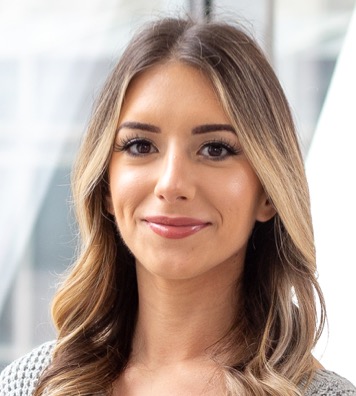
Name: Andjela Dragojevic, MS
MS-RSM Class of 2020
Could you describe the research you conducted in the program?
During my time at Northwestern, I have been working with Dr. Pamela Monahan, Dr. Jessica Hornick, and Monica Elabed in order to investigate alterations in key regulators of angiogenesis that play a role in the development of abnormal vasculature in an induced preeclamptic rat model. Preeclampsia is a multi-system progressive disorder that affects up to 10% of pregnancies worldwide and can lead to mortality and morbidity of mother and fetus.
Although the etiology of preeclampsia is unclear, it has been associated with decreased trophoblast cell invasion, impaired maternal and fetal vasculature, and development of a hypoxic fetal environment. In our work, "Characterization of Vascular Defects in Placental Development in a Rat Model of Preeclampsia," we have been observing histological characterization of cell morphology and structure, gene expression alterations, and utilizing staining and immunohistochemistry to determine a cause of vascular defects in preeclampsia. As we shifted to a remote platform for the spring quarter due to Covid19, we did a lot of image analysis from our microscopy pictures we took in the winter quarter.
What initially drew you to the MS-RSM program?
I was on a pre-med/pre-PA path all throughout undergrad, but gained a lot of research experience during my Neuroscience major. I was looking for a graduate program that was able to bridge the gap between clinical and research, which this program did really well. Some classes were strictly focused on research and techniques, as others gave a purely clinical aspect to the program. I have reproductive cancers in my family, so it was exciting to find a program that was tailored towards something I could relate to personally.
Which course(s) did you find most valuable to your training as a reproductive scientist?
I found the Female and Male Reproductive Physiology taught by Dr. Pamela Monahan to be most valuable in my training. These two classes were offered our first quarter and really set the tone for what the rest of the program would be like. We learned several molecular and biochemical concepts, but also related them to clinical applications. These were the most challenging classes for me, but also the most rewarding. Looking back at my stacks of notes I had, it's amazing to think how much we were able to push ourselves and learn novel concepts.
Which event(s) did you find most interesting and/or valuable?
I found going to conferences to be the most interesting. The first quarter, we were invited to attend the Oncofertility Consortium and the ISRS. There were people from all over the country coming into the Northwestern Medicine Prentice Women's Hospital to present and listen. We also got to chat with the speakers and other students during the happy hours. Northwestern has done a great job of exposing us to so many great names in the reproductive sciences and medicine. We have been very fortunate to have Dr. Teresa Woodruff and Dr. Francesca Duncan lead this program, as they are world renowned scientists in the field.
How do you feel you have changed the most during your time in this program?
This program has pushed me to my breaking point several times, especially with this unique situation of a global pandemic. It has taught me to persevere through the difficulties and take one day at a time. I have also been exposed to more technology and advancements in the field than I could have ever imagined.
What advice would you give to current applicants as well as current MS-RSM students?
One word: network!!! This program has opened my eyes about how important networking is. We had an assignment for a career class where we were told to create a LinkedIn. After actually using it, I have connected to several big names in the field. I wish I would have made one during my first quarter, because you meet so many people. Most professionals have a LinkedIn, so making that connection right away could pay off down the road. Also- relax. There will be times you get extremely overwhelmed and everything is due the same week....breathe! It will be okay and you will get through it! Do not procrastinate :)
What are your future plans?
I plan on continuing some of my research project on preeclampsia over summer. I also was awarded a 12- week fellowship from the Endocrine Society, where I will be co-mentored by Dr. Courtney Finlayson and Dr. Monica Laronda. My project focuses on efforts in advancing fertility restoration options for Turner Syndrome (TS) patients. I will be addressing fundamental questions about the state of ovarian follicles in TS gonadal tissue and also aim to advance in vitro follicle maturation techniques utilizing a 3D printed scaffold.
Do you have any notable stories?
Kind of random, but I liked to aimlessly explore areas of the downtown campus. I checked out Feinburg's library and saw several exercise equipment on the top level! This was definitely not something I was expecting, but hey, whatever gets the brain juices flowing!