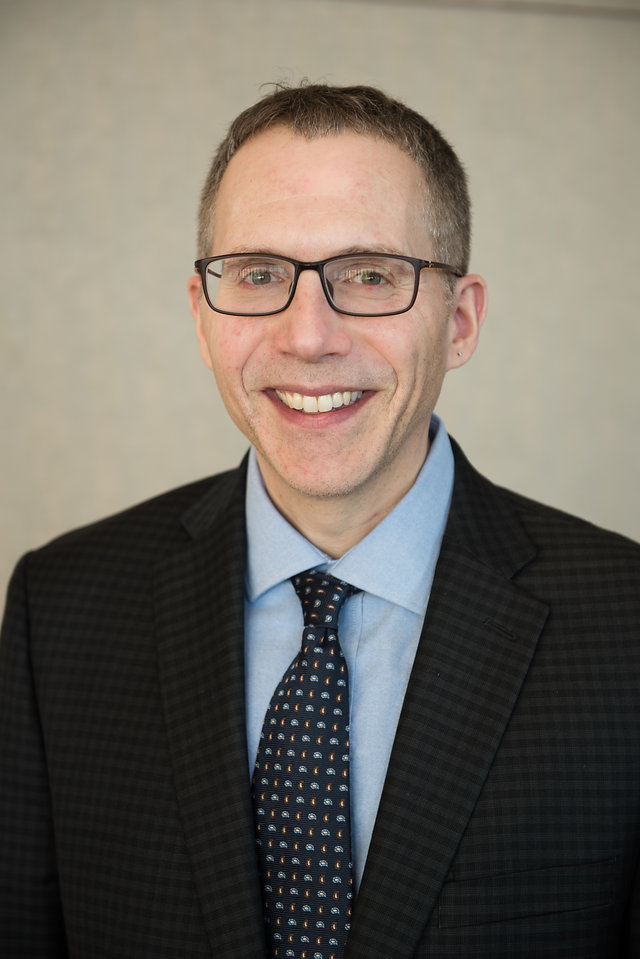
Interview with Dan Bernard, PhD
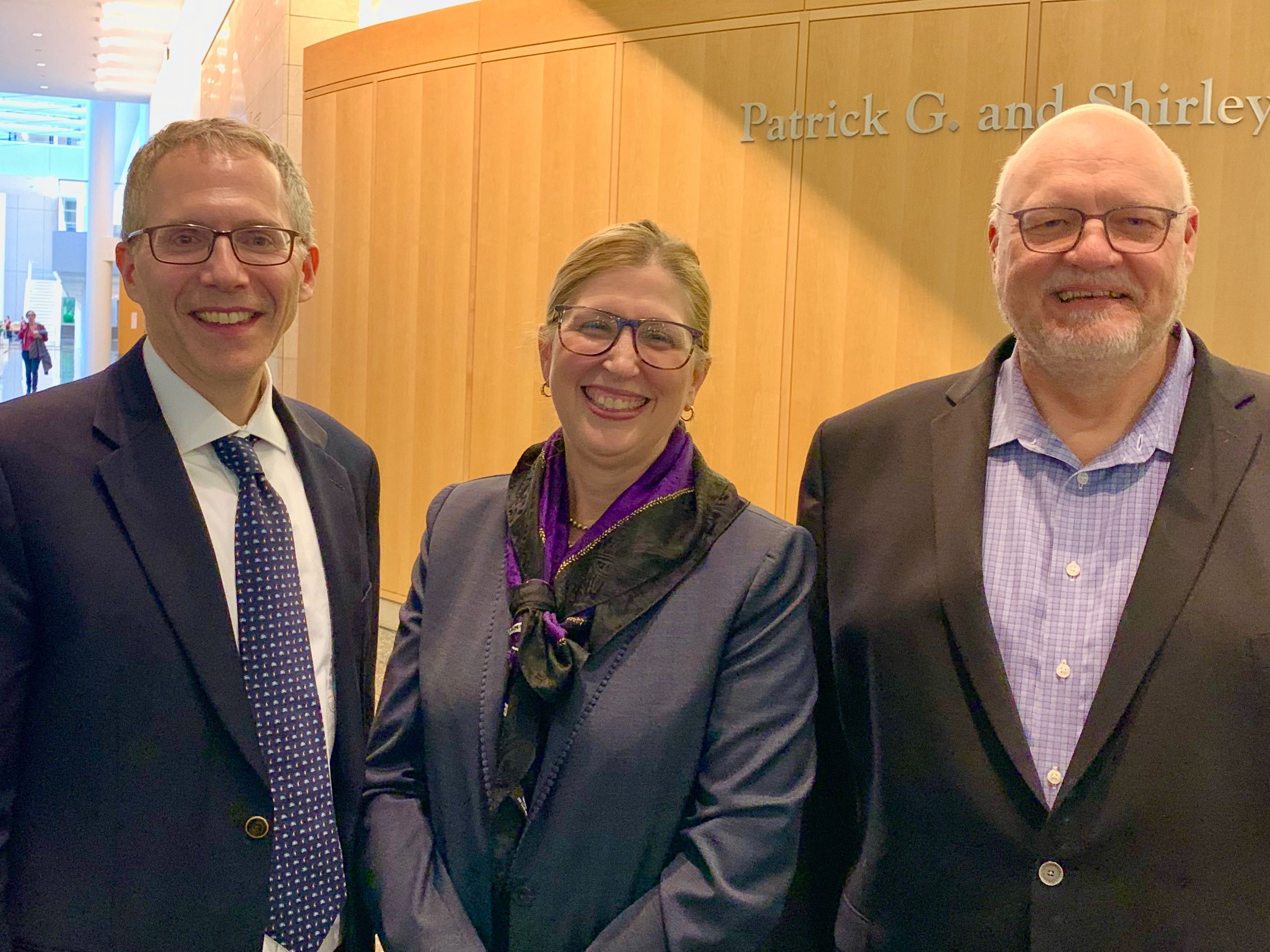
Last week, we hosted Professor Dan Bernard from McGill University (Canada) for the 2019 Neena B. Schwartz Memorial Lectureship. Along with stirring faculty meetings and a fantastic lecture on inhibin activation, Dr. Bernard spoke with Shweta Dipali, a graduate student in the Duncan Lab and Driskill Graduate Program in Life Sciences, and trainee on the Center for Reproductive Science's T32 Training Grant in Reproductive Science, Medicine, and Technology, about living, learning, and a lifelong commitment to science:
What science topic are you most excited to see develop in the future?
I’d like to see major advances in in neurodegeneration. Specifically, I think that there are going to major breakthroughs in understanding Alzheimer’s disease when there is a paradigm shift away from the amyloid-b hypothesis in that field.
Why did you choose your current career path?
Like a lot of people that liked science I initially wanted to go into medicine. In my second year of college I took a class in animal behavior and the professor of this class didn’t just tell us facts but instead explained where they came from. He would describe experiments and their results, and this was the first time I was really exposed to the scientific method. Early on in that class a lightbulb went off and I realized that this was what I wanted to do. I liked knowing facts, but I wanted to be the one who figured them out, which led me to research.
What is your worst lab mishap?
When I was first running Northern blots, I was walking from the bench to where the UV box was so I could take a picture of the RNA and I was holding the casting tray flat. The gel slid out, hit the floor, and because it was brittle due to the denaturing reagents you have to add, it broke into a million pieces.
What hobbies do you have outside of the lab?
I’m an avid cyclist and a bit of a news junkie.
What was the most valuable experience you had in grad school?
In the second semester of my first year, I took a course called Neurobiology of Behavior where I learned about the neural system that controls song learning and production in birds. This is still my first love in science and after being introduced to this topic, I literally read every paper in the field. It just so happened that they hired a new faculty member that year who worked on this system and I switched into his lab. Working in his lab and on this system made me a more mechanistic scientist.