Interview with ISRS Speaker, Randall Prather
The 2019 Illinois Symposium on Reproductive Science will take place on November 13-14 in Prentice Women’s Hospital, Chicago, and we are looking forward to presentations from our distinguished speakers! Featured in this CRS New Story is an interview with Dr. Randall S. Prather from the Division of Animal Sciences at the University of Missouri:
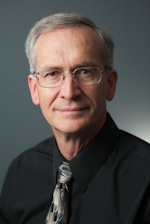
Your lab is focused on embryo development in pigs. When did you become interested in this topic?
My father was a veterinarian that initially practiced in Wisconsin. He was very involved with dairy herd health and reproductive management. He was one of the first distributors for ABS. This desire to improve genetics rubbed off on me. We moved to Kansas when I was in high school and bought 300 cows from Montana. We picked out the best-looking animals and began an AI program. My focus was to work on cattle. I had zero interest in pigs.
When I was at Kansas State my advisor told me that I had to take his swine science class in order to graduate. I told him in no uncertain terms that I would never work with pigs. Let’s just say that I did graduate.
When I got to UW Madison I worked on mouse and cattle embryos. There was a lot of competition for the cattle material. Bill Pope was a postdoc in the lab working on pigs and he got a job at The Ohio State University. Since he was the only person working on pigs I filled the vacuum he left and took control and switched species. Professionally, that turned out to be a great decision.
How was the transition from a post-doc researcher to directing your own group?
Smooth. As a postdoc I wrote a USDA grant that got funded under Neal First. I also wrote an NIH postdoctoral grant under Jerry Schatten that was approved but I declined it since I had the larger USDA grant. I ran the first year of the USDA grant under Neal, then he let me take the second year of funding with me to Missouri. Having that extra boost when I started as a new assistant professor was very valuable. I’m so thankful for him teaching me how to write and run a grant. Learning how to write a grant was the most valuable lesson that I had as a postdoc. Note that I try to write grants, and I try to avoid writing proposals; although I unfortunately do write some proposals.
How do you achieve a good work-life balance?
When at work focus on work. Don’t stand around in the hallway and tell jokes. When at home focus on home. I seldom work at home and I keep my weekends free for family.
What hobbies do you have outside of the lab?
I have a few cows and we finish out and eat the calves. I like to bass fish. I enjoy making things with my hands, so woodworking is enjoyable. I enjoy deer hunting, especially the family/social aspects.
What do you think will be the next big contribution in the reproductive biology field?
Wow, I don’t have a crystal ball. I view a lot of reproductive biology as a means to the end rather than the end. I’m more interested in how can I use the in vitro embryo production system to create embryos in an efficient manner for other projects.
What would you recommend to junior scientists (PhD/junior postdocs) in order to succeed in their scientific careers?
Solve an important problem. Work on something that will make a difference. Don’t do “me too” research. Don’t “mash potatoes”. Move on to a new interesting project instead of looking at the same thing over and over from different angles. Also, find a mentor. Try and forget about work when you are home.